Fixing Hubble: Cepollina on Five Servicing Missions and COSTAR
The short version
Frank Cepollina of NASA's Goddard Space Flight Center gives a Smithsonian National Air and Space Museum lecture on the five Hubble Space Telescope servicing missions. He describes the blurred mirror found in 1990, the COSTAR corrective optics, the later instrument and gyro upgrades, and the spacewalk repairs of the final mission. He also discusses spin-off technologies and a possible 1,000-inch telescope, then answers audience questions.
Full written account
In a lecture at the Smithsonian National Air and Space Museum, Frank J. "Cepi" Cepollina of NASA's Satellite Servicing Capabilities Office walked through the five Hubble Space Telescope servicing missions. The talk opened the museum's spring Exploring Space series marking Hubble's 25th anniversary. Cepollina, who had spent four decades at Goddard Space Flight Center, said the telescope began as a $1.6 billion observatory with a blurred mirror and ended up the premier system in operation.
Background: a serviceable telescope
Cepollina traced the idea to 1970, when Lyman Spitzer and Joe Purcell proposed that a large telescope be built modular and serviceable so that science could be swapped out and mistakes fixed. Their design was 50 feet in diameter with a 3-meter (120-inch) primary mirror. A working engineering mockup was built, and in 1975 it was taken to Downey, California, headquarters of North American Aviation, which was developing the Space Shuttle. There it was placed inside a Shuttle mockup, and with Canadian participation a robotic servicing system demonstrated serviceability and interchangeability of modules at full scale in 1 G.
The Hubble program formally started around 1978. Marshall Space Flight Center took the telescope, while Goddard took the instrument modules, their development and operations. To demonstrate modularity, headquarters had Goddard build a small modular telescope, Solar Max. Its 1984 repair was the first Shuttle modular servicing mission with astronauts on EVA. Cepollina said that in the following four years companies repaired commercial satellites, including Westar, Palapa, Syncom IV and Intelsat 6, in a case he called driven purely by economics.
The problems in 1990
Cepollina joined the Hubble repair program in June 1990 from Solar Max. The mirror had been polished one half the thickness of a human hair too flat over 100 inches, an error he gave as 0.035 millimeter. Other problems:
- Every 90 minutes the telescope passed in and out of sunlight, and the solar arrays caused it to jerk off its target star.
- Gyroscopes were failing.
- The onboard computer was undersized.
First servicing mission: restoring the dream
The first mission launched on the 2nd of December. Cepollina left the control center on the 4th after being told his 28-year-old daughter had died of a heart attack. He returned later and said the most striking view was of the broken solar array bistem, bent at about 40 degrees, as the Shuttle approached. It confirmed the decision to bring a replacement array. Kathy Thornton used tools developed for the job to grab the old array and eject it; it burned up in the atmosphere within about six months.
The blurred vision was fixed with COSTAR, a $100 million instrument with a telescoping optical periscope that deployed tiny mirrors into the incoming light path, correcting the aberration much as glasses do for an eye. Its optics ranged from dime to quarter size. A replacement camera, a new-generation wide field camera, also carried corrective optics, and that mission produced the Eagle Nebula picture. The returned wide field camera and COSTAR are displayed in the museum; the holes in them record meteoroid impacts over three years of flight.
Missions two and three
The second mission, in 1997, upgraded the telescope with two instruments: STIS, an imaging spectrograph that breaks starlight into a spectrum, and NICMOS, an infrared camera giving Hubble near-infrared vision. One of STIS's early images, of galaxy M84, indicated a black hole; Cepollina said there is probably a black hole at the center of almost every major galaxy observable.
NASA counted the third visit as missions 3A (December 1999) and 3B about a year later, but together with the others they made five. They were meant to be combined but were split by the launch window, crew numbers, weather and delays. They added a new fine guidance unit, new gyros and a new power control unit, which was never designed to be removable. John Grunsfeld, the only left-handed astronaut in the Hubble work, replaced it with his left hand, connecting 26 connectors. The next day a new solar array using second-generation gallium arsenide detectors was installed; with the power control unit it gave 30% more power. The Advanced Camera for Surveys was also installed.
Mission four
Mission four was to ready Hubble for long-term stability and was planned as the last. It had five EVA days averaging 6 hours 10 minutes, and did more repair and exchange work than any other mission. For the first time circuit boards were replaced inside existing instruments. Cepollina credited automated tools, training and astronauts' experience, with Grunsfeld leading.
On STIS, a handle blocked a panel secured by 110 screws, and the bolts stripped. Ground and crew agreed to break the handle off; breakaway tests on the ground showed it would take about 60 pounds of force, and Mike Massimino, whom Cepollina called the biggest, strongest astronaut, said that was a piece of cake. The chief scientist, Dave Leckrone, was "going bonkers" as it happened, but it worked. Another astronaut cut a hole in an instrument's side and swapped four circuit boards for a different, more powerful design with less noise, in record time. The repaired instrument was 20% more powerful.
Wide Field 3 was also installed. Wide Field 1 cost almost $200 million, Wide Field 2 $160 million and Wide Field 3 $120 million, because it reused structure, electronics and mechanical interface fittings from Wide Field 1. Its detectors were only six months old at launch, delivered just in time, whereas detectors normally fly four or five years after purchase.
Spin-offs and the future
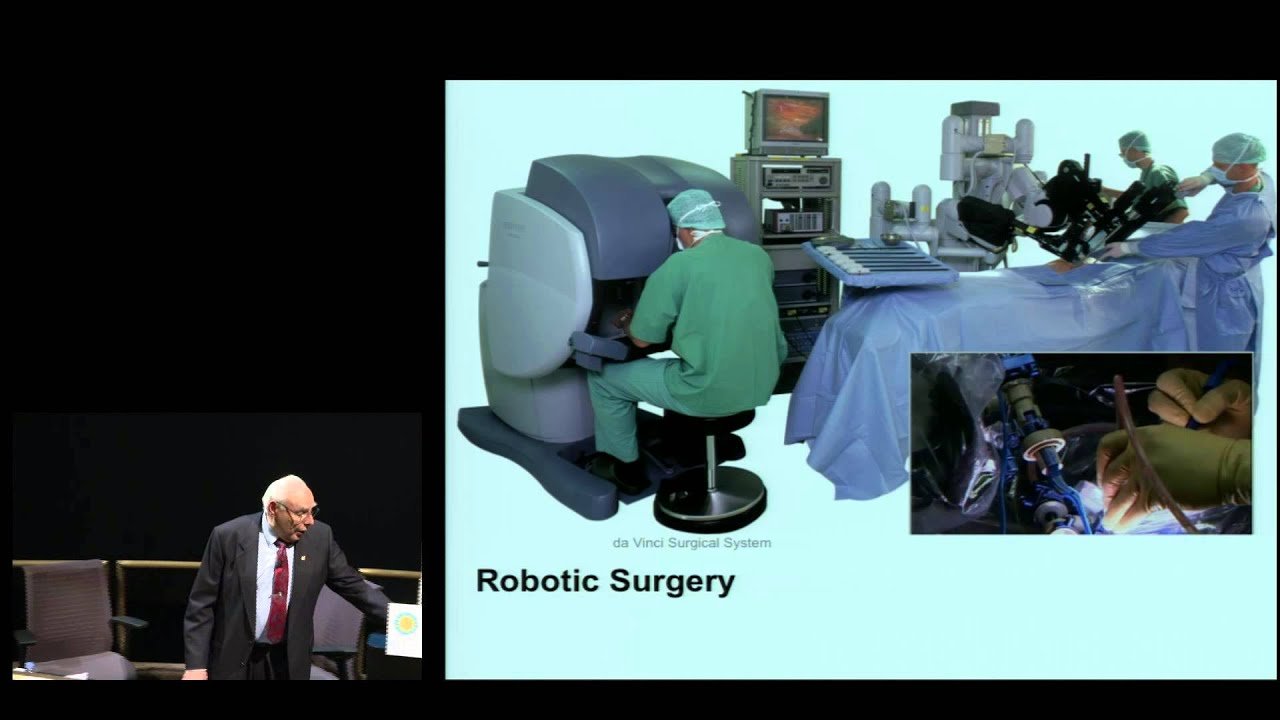
Cepollina argued the missions had social impact. He linked sharper optics to photolithography for chips, saying COSTAR's dime-size optics were polished to 1/100,000 of the thickness of a human hair, though he said NASA did not invent the process. He said a detector from the University of Kentucky medical school, improved for STIS, was handed back and over 1,000 stereoscopic breast biopsy machines were in doctors' offices a year before STIS launched. Tools with embedded microprocessors, where astronauts set torque, speed and direction, and the Canadian-built robotic arm he tied to surgical robots such as the da Vinci, with over 10,000 machines, and NeuroArm.
In questions, he estimated three to five more years before gyros and batteries fail, said the choice would be to fix Hubble or abandon it, and said astronomers want Hubble's ultraviolet capability, which JWST lacks. He said Hubble sends about 1.7 terabytes of data a year at about 1 megabit per second via TDRS or directly to White Sands. He is studying a 1,000-inch (25-meter) telescope, assembled in orbit using SLS, Orion, robot arms and crew. He named bureaucracy as the killer of innovation.
Questions this video answers
What was wrong with Hubble in 1990?
The mirror was polished about one half the thickness of a human hair too flat over 100 inches, causing blurred vision. The solar arrays also jerked the telescope off its target, the gyroscopes were failing and the computer was undersized.
What fixed Hubble's blurred vision?
COSTAR, a $100 million instrument with a telescoping optical periscope and small corrective optics, and a new wide field camera that had corrective optics built in.
How many servicing missions were there?
Five, although NASA labelled two of them 3A and 3B.
How long did Cepollina expect Hubble to last?
He estimated another three to five years before gyros and batteries would fail, unless it was repaired.
Why was Wide Field 3 cheaper?
It reused the structure, electronics and mechanical interface fittings from Wide Field 1, and cost 120 against nearly 200 million for Wide Field 1.
Explore related missions
Connected by the topic: Space Shuttle