Sophie Adenot’s Three ISS Spacewalks: Antenna Swap in 14 Days
The short version
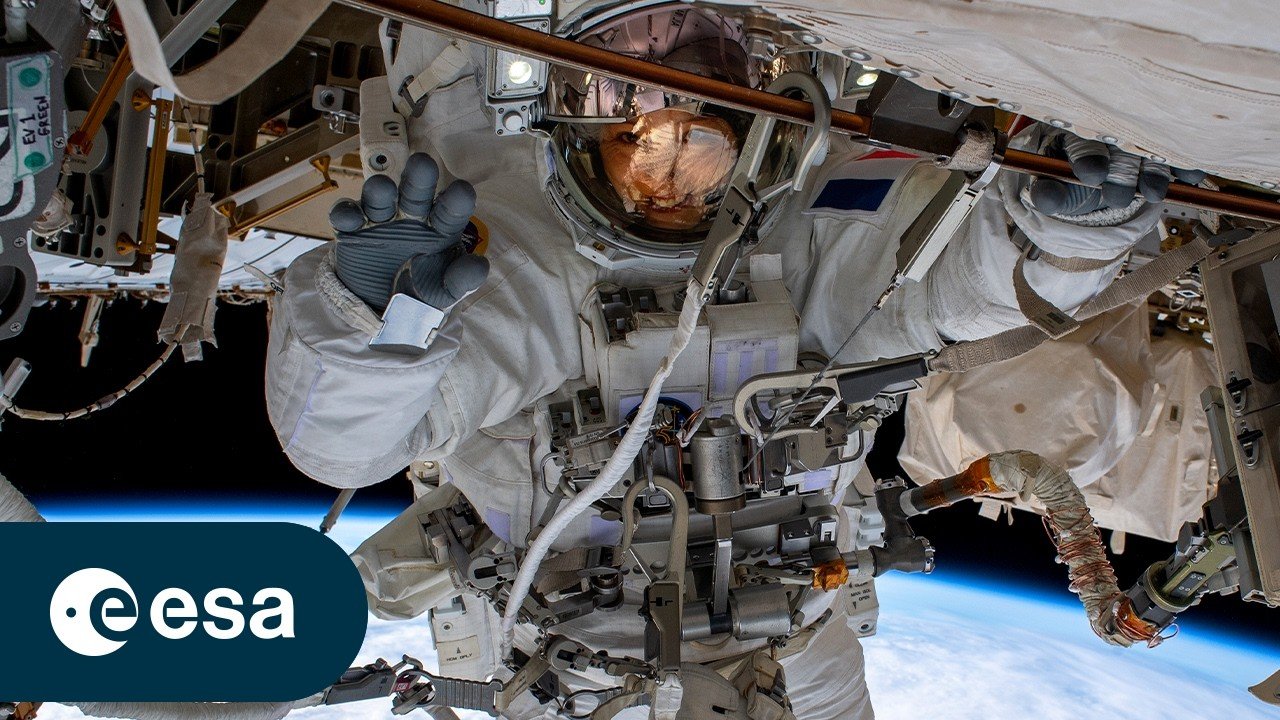
ESA astronaut Sophie Adenot performed three spacewalks in under 15 days, spending 19 hours and 42 minutes outside the International Space Station. The first two replaced a failed space-to-ground antenna, and the third, which she led as EV1 with Jessica Meir, covered several maintenance tasks and included a restriction in her left arm movement that the crew traced to a glove heater cable.
Full written account
ESA astronaut Sophie Adenot performed three spacewalks in less than 15 days, spending 19 hours and 42 minutes outside the International Space Station. She became the first French woman and the second European woman to perform an EVA.
Why did the antenna need replacing?
Her first spacewalk, US EVA 97, had one main objective: to remove and replace one of the station's two space-to-ground antennas, which enable high-rate Ku-band communications between the station and Earth. Since November 2025, a failed gimbal had left the antenna unable to point towards the tracking and data relay satellites. The failed unit has a mass of 88 kg, with a dish 1.8 m across mounted on a 1.8 m high boom.
First spacewalk: August 18th
On August 18th Adenot stepped outside for the first time. Outside, temperatures can swing from around minus 157 to plus 121 °C depending on sunlight or shadow. The antenna was mounted on a boom on the station's truss. Her crewmate rode the Canadarm2 robotic arm, operated from inside by NASA astronaut Jack Hathaway, while Adenot translated independently across the exterior.
The pair secured the antenna, disconnected its electrical connectors and removed the bolts, but several bolts and connectors were stuck. Freeing the antenna took extra time and close coordination with mission control. With time running short, mission control revised the plan: instead of moving the old antenna to a storage platform and installing the replacement, the astronauts secured it to the station structure. They returned inside after 6 and a half hours.
Second spacewalk: installing the spare
One week later they went back out to finalize the replacement. They retrieved the spare antenna, transported it to its new position and prepared the mounting point. Adenot cleaned and lubricated the bolt inserts. Afterwards the team heard that there was good power and data to the newly installed antenna.
Third spacewalk: leading as EV1
Eight days later NASA confirmed her for a third spacewalk. After almost 13 hours outside in her first two EVAs, she now led as EV1. On September 1st she went out with NASA astronaut Jessica Meir. They replaced a retroreflector used for spacecraft navigation, prepared the Alpha Magnetic Spectrometer for future maintenance, replaced an external camera and collected a swab from the exterior to look for microorganisms.
Adenot then reported a limitation in the movement of her left arm. Mission control guided her through movements to assess it and confirm she could still perform rescue procedures if needed. Before re-entering, the crew found that a cable from the glove heater harness was restricting movement around her shoulder. The cable was freed and she confirmed full movement. As a precaution, mission control adjusted the ingress procedure: Adenot entered the airlock first and Meir closed the hatch.
Questions this video answers
How long did Sophie Adenot spend outside the ISS?
19 hours and 42 minutes across three spacewalks in 14 days, according to the video.
What was the main goal of the first spacewalk?
To remove and replace one of the station's two space-to-ground antennas, which enable high-rate Ku-band communications.
Who did she work with?
Her first spacewalk was with NASA astronaut Anne McClain, and her third with NASA astronaut Jessica Meir. Jack Hathaway operated Canadarm2 from inside.
What problem occurred on the third spacewalk?
Her left arm movement was restricted. The crew found a cable from the glove heater harness was restricting movement around her shoulder, and freed it.