Space Stations from Salyut 1 to Tiangong and Beyond
The short version
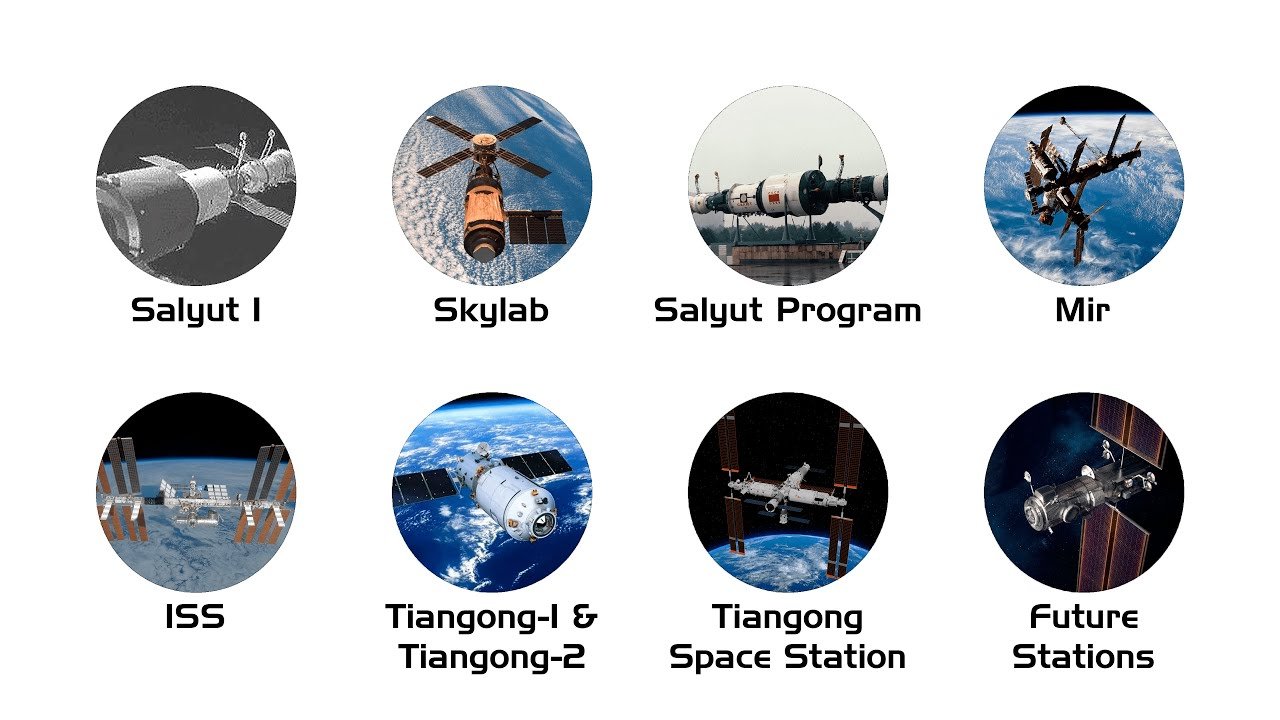
A five-minute survey of space stations: Salyut 1, Skylab, the Salyut program, Mir, the ISS, Tiangong-1 and Tiangong-2, the Tiangong Space Station, and planned future stations such as the Lunar Gateway and commercial stations from companies like Axiom Space. It covers launch years and key facts for each, including the Soyuz 11 crew dying during return from Salyut 1. It is an overview of several stations, not a single mission.
Full written account
Salyut 1, launched by the Soviet Union in 1971, was the world's first space station, and its second crewed mission ended with the deaths of three men. It began a line of stations that runs through Skylab, Mir and the International Space Station to China's Tiangong and the commercial outposts now planned.
Salyut 1 and the Salyut program
Salyut 1 was a monolithic outpost sent up in a single piece. Its first crewed mission, Soyuz 10, failed to dock successfully. The second, Soyuz 11, had its three-man crew live aboard for a record-breaking 23 days, showing that humans could live and work in space for extended periods. The three crew members died during their return to Earth because of a capsule depressurization.
The Salyut program that followed was split into two types: civilian scientific stations and top-secret military reconnaissance stations disguised with Salyut designations. Though plagued by early failures, the stations let cosmonauts progressively break human endurance records, master cargo resupply and learn to conduct complex work in orbit, paving the way to Mir.
Skylab
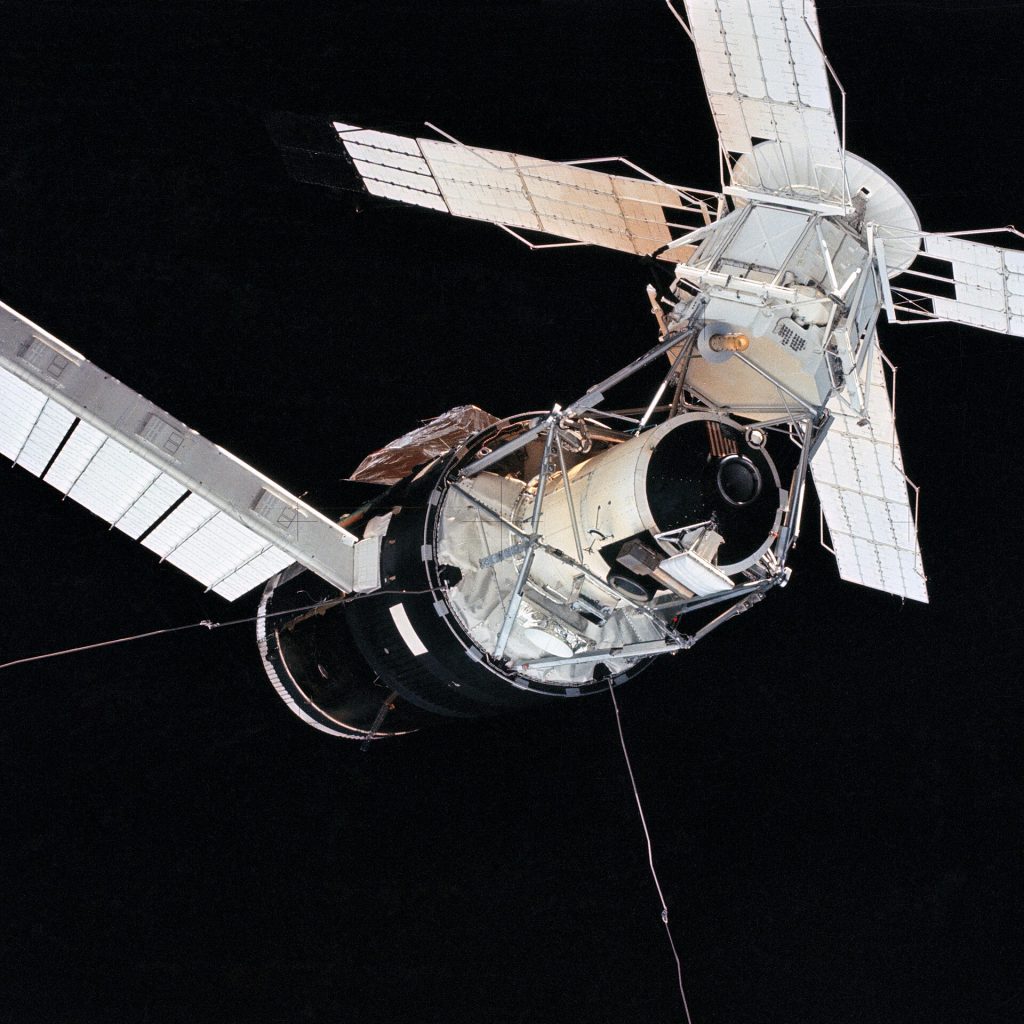
Skylab was America's first and only solo space station, built from a converted upper stage of a Saturn V rocket. Launched in 1973, it was damaged during ascent and lost one solar array and its micrometeoroid shield, which also served as a thermal shield. The first crew performed a spacewalk to repair it. Its large interior volume allowed medical experiments on long-duration spaceflight, and it served as a solar observatory. It hosted three crews before its orbit decayed and it burned up over Australia in 1979.
Mir
Mir, launched in 1986, was the first modular space station. It began as a single core module, and five more science modules were added over the next decade. It held the record for the longest continuous human presence in space for ten years, surviving fires, collisions and the collapse of the Soviet Union. Under the Shuttle-Mir program, American astronauts became long-term residents. The station was de-orbited in 2001.
The International Space Station
The ISS is a joint project of the United States, Russia, Europe, Japan and Canada. Assembly began in 1998, and a multinational crew has lived aboard continuously since November 2000. It is the size of a football field and is dedicated to research in microgravity and to testing technologies for future deep-space missions.
China's stations
Tiangong-1 and Tiangong-2 were smaller single-module prototypes designed as testbeds for rendezvous, automated docking and life support. Several Shenzhou crews visited them, including China's first female taikonauts. Construction of the Tiangong Space Station began in 2021. Its T-shaped design, a core module and two laboratory modules, is similar in concept to Mir. Its completion makes China the third country to independently build and operate a long-term human outpost in orbit.
Future stations
The Lunar Gateway is planned to orbit the Moon rather than Earth, as a small outpost and staging point for the Artemis missions. In Earth orbit, private companies such as Axiom Space are building their own stations, aiming to have NASA and other customers pay to use them.
Questions this video answers
What was the first space station?
Salyut 1, launched by the Soviet Union in 1971 as a monolithic station sent up in a single piece.
What happened to the Soyuz 11 crew?
They lived aboard Salyut 1 for a record-breaking 23 days, but the three-man crew died during their return to Earth because of a capsule depressurization.
How was Skylab built?
It was built from a converted upper stage of a Saturn V rocket and launched in 1973.
What was special about Mir?
It was the first modular space station, launched in 1986 as a core module, with five more science modules added over the next decade. It held the record for the longest continuous human presence in space for ten years.
Since when has the ISS been continuously inhabited?
Since November 2000; assembly began in 1998.
What comes after the ISS?
The video points to the Lunar Gateway in lunar orbit and to commercial stations, such as those Axiom Space is building, that NASA and other customers would pay to use.