Starship Flight 14 Reaches Orbit and Three Falcons Fly in One Day
The short version
A roundup of space news from roughly the last two weeks before October 6th. It covers Starship Flight 14 reaching orbit, SpaceX launching Crew 13, Transporter 18 and a Falcon Heavy with NROL-97 on October 1st, and updates on Starliner, Artemis III and Blue Origin's lunar lander. It also touches on JUICE's Earth flyby, NASA's PRIMA telescope, Rocket Lab contracts and several smaller stories.
Full written account
Starship Flight 14 reached orbit from Starbase in early autumn, and three days later SpaceX launched all three of its Falcon variants on a single day, October 1st. Those two stories sit at the centre of a roundup of the previous couple of weeks in spaceflight, alongside updates on Starliner, Artemis III, Blue Origin and a range of smaller missions.
Starship Flight 14
The launch went off about half an hour late, early in the morning, to line up with landing opportunities. One Raptor engine went out during ascent. Staging worked and the booster returned, performing a soft deceleration and splashdown in the Gulf, a first for the V3.
The ship lost a vacuum engine, which the presenter suggests may have been one of the no-go conditions. Controllers had roughly 20 minutes to decide whether to keep accelerating into orbit. The commentator first said it would not go to orbit, then changed course about a minute later. After an anxious wait, the ship relit its engines and circularized in a roughly 275 km, 30.5° inclination orbit.
Starlink satellites were then deployed, less hurriedly than on earlier flights. The mission could have run as many as six orbits, but the ship was brought back in the middle of the second orbit, north of Hawaii. Re-entry was close to flawless; the ship landed, fell over and exploded, as expected. The flight fell on the 18th anniversary of Falcon 1 reaching orbit. The satellites later rose to about 300 km and appeared to be navigating successfully.
October 1st: all three Falcon variants
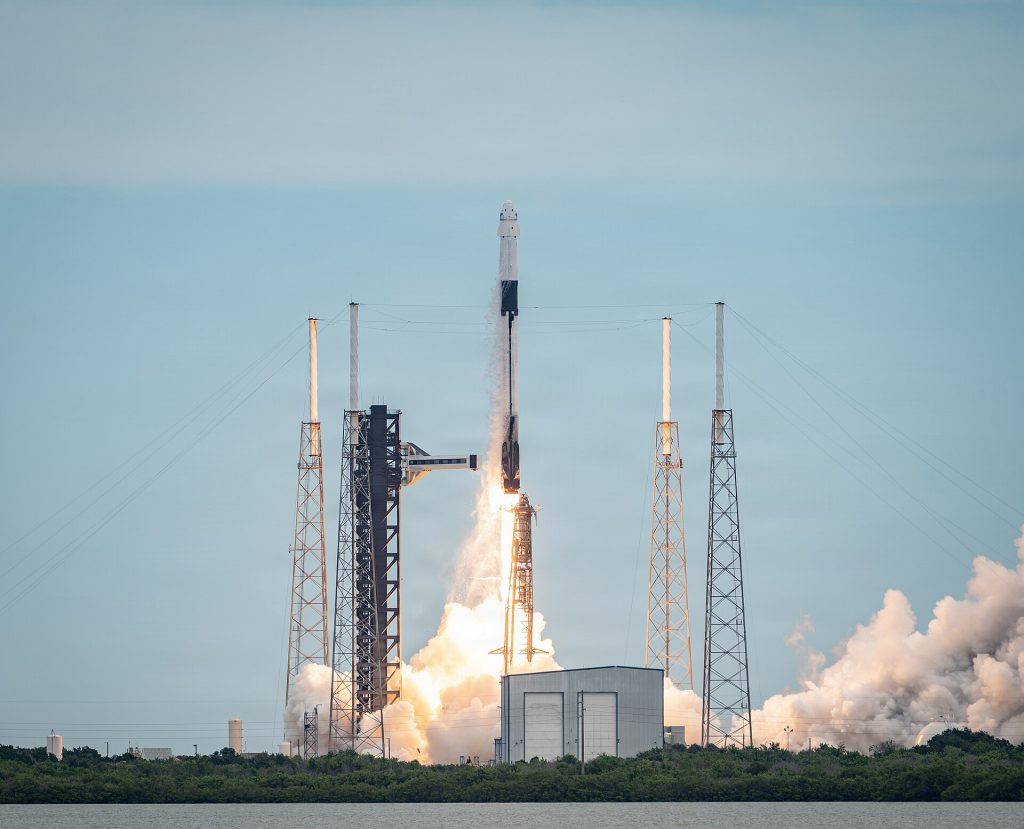
Crew 13 launched on a Falcon 9 with the Dragon Grace. The crew was Jessica Watkins as commander, on her second flight, NASA's Luke Delaney, Canada's Joshua Kutryk and Roscosmos' Sergey Teteryatnikov. The launch had been planned for September 12th but was delayed by an oxidizer leak, which technicians repaired by cutting into piping and welding in limited space. The Dragon reached the station in 7 hours and 55 minutes. Crew 12 was due to undock the following day and land off California on Thursday.
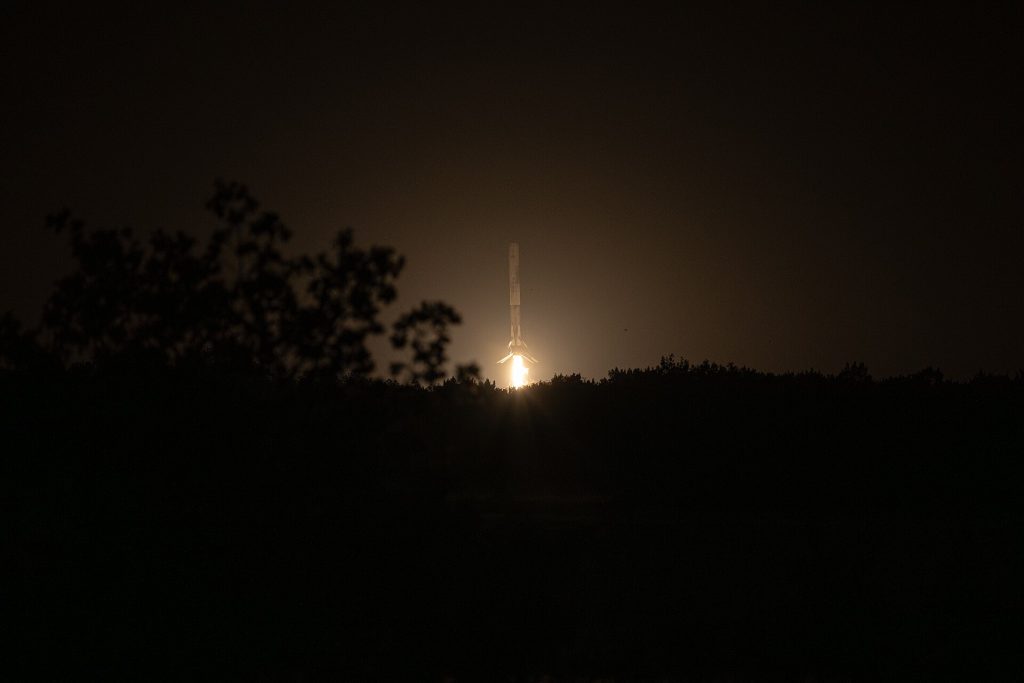
The same day a Falcon 9 carried Transporter 18 with 130 payloads into sun-synchronous orbit, and the booster returned to LZ-4. Payloads included Google and Planet's Project SunCatcher, Planet's Tanager 2 and 18 Super Doves, Varda's two re-entry capsules and NASA's SPRITE CubeSat. A Falcon Heavy then launched NROL-97, the first Falcon Heavy launch of an NRO payload, with its boosters returning to the landing site.
Starliner, Artemis III and Blue Origin
Starliner 1 is confirmed as an uncrewed cargo mission, potentially December but reportedly slipped to January 2027. If it succeeds, Starliner 2 could fly in 2028 with Woody Hoburg commanding, probably with four astronauts. NASA will also pay for Starliner to be certified on ULA's Vulcan.
Artemis III's SLS is being stacked, with the fueled segments on both boosters in place. It looks to be no earlier than June 2027, and is described as a low orbit flight.
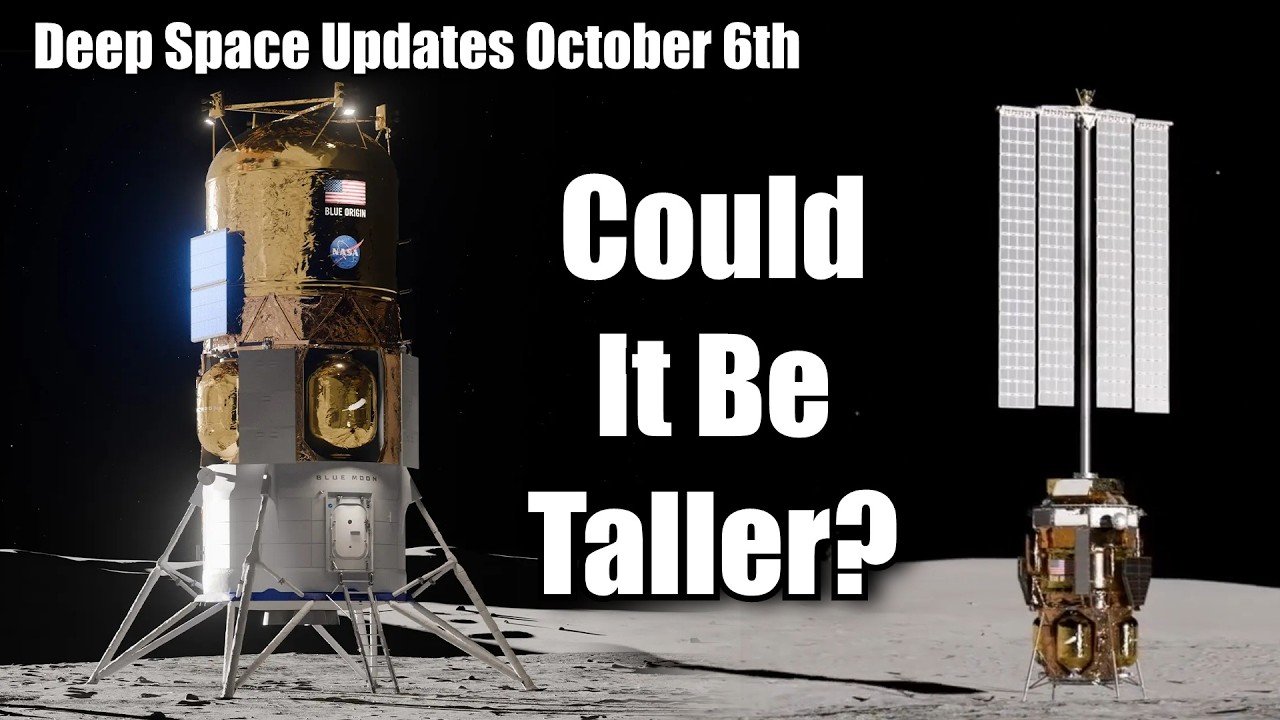
Blue Origin released new renders of the Blue Moon Mark 2, now with four separate oxygen tanks like the Mark 1, new insulation, attitude control jets, solar arrays and stronger landing legs. It also showed a power tower, with a mast of about 20 m carrying solar panels. New Glenn 9 by 4 is now on NASA's launch menu alongside the 7 by 2.
Other stories
- Rocket Lab launched Electron missions for iQPS-style radar customers and sold 20 more launches to Synspective-type constellation operator Space Objective, bringing their total to about 47 contracted launches, 13 flown.
- JUICE made its third gravity assist, passing over the Indian Ocean at 8,640 km and adding about 3.5 km/s. It should reach Jupiter in July 2031.
- NASA awarded PRIMA, a far infrared telescope with a 1.8 m mirror; the competing AXIS X-ray probe exceeded its budget by 10%.
- CAPSTONE 2 will be a pair of 400 kg Terran Orbital spacecraft, a chaser and a target, in a near rectilinear halo orbit.
- Starship Flight 7 and 8 accident reports, obtained by a FOIA request, are heavily redacted. For Flight 8 they record sparks on engine one about 320 seconds into the burn, about 10 seconds before a significant dynamic event.
Questions this video answers
Did Starship Flight 14 reach orbit?
Yes. One Raptor engine went out on ascent and the ship lost a vacuum engine, but after a decision lasting some minutes it relit its engines and circularized in roughly a 275 km, 30.5° orbit.
What happened to the Flight 14 booster?
It performed a soft deceleration and splashdown in the Gulf, a first for the V3.
Who flew on Crew 13?
Jessica Watkins as commander, NASA's Luke Delaney, Canada's Joshua Kutryk and Roscosmos' Sergey Teteryatnikov, aboard the Dragon Grace.
How fast did Crew 13 reach the ISS?
In 7 hours and 55 minutes, described as the fastest flight of a US spacecraft to the station.
What did SpaceX launch on October 1st?
A Falcon 9 with Crew 13, a Falcon 9 with Transporter 18 carrying 130 payloads, and a Falcon Heavy with NROL-97.
When could Starliner fly next?
Starliner 1 is confirmed as an uncrewed cargo mission, said to have slipped to January 2027. Starliner 2 could follow in 2028.