Challenger STS-51-L: Cold, O-Rings and the Rogers Commission
The short version
STS-51-L, the 25th Space Shuttle mission, lifted off on January 28, 1986 in record cold, and Challenger was destroyed 73 seconds later, killing all seven crew members. The film covers the crew, the launch delays, the recovery effort, the Rogers Commission's finding on the O-ring seals, and the memorials that followed.
Full written account
STS-51-L, the 25th Space Shuttle mission, ended 73 seconds after liftoff on January 28, 1986, when Challenger was destroyed and all seven crew members died. The launch from Kennedy Space Center pad 39B was watched by millions, including schoolchildren following the first civilian chosen to fly in space.
A cold morning and a crowded schedule
In the early hours of January 28, a rare Florida cold snap held temperatures in the lower 30s, and ice formed on the launch tower and nearby equipment. The O-ring rubber seals in the solid rocket boosters were stiff from the cold. Engineers inspected the shuttle's exterior because of the ice, and the mission was cleared to proceed.
The flight had been scheduled for January 22. Delays with previous shuttle flights, a hatch bolt problem and weather at the launch site and emergency landing zones pushed it back. NASA was facing scrutiny from Congress and the public, and by January 28 there was a strong desire to proceed. Some engineers voiced concerns about how the cold might affect critical components. Their warnings were noted and examined, but the decision was made to move forward.
The crew
The crew was Commander Dick Scobee, pilot Michael J. Smith, mission specialists Judith Resnik, Ellison Onizuka and Ronald McNair, and payload specialists Gregory Jarvis and Christa McAuliffe. Scobee had more than 6,500 flight hours and was on his second spaceflight. Smith, Jarvis and McAuliffe were on their first. McAuliffe, a social studies teacher from Concord, New Hampshire, was chosen from more than 11,000 applicants under NASA's Teacher in Space program and planned to teach two live lessons from orbit. Challenger had flown nine times before.
Launch and loss
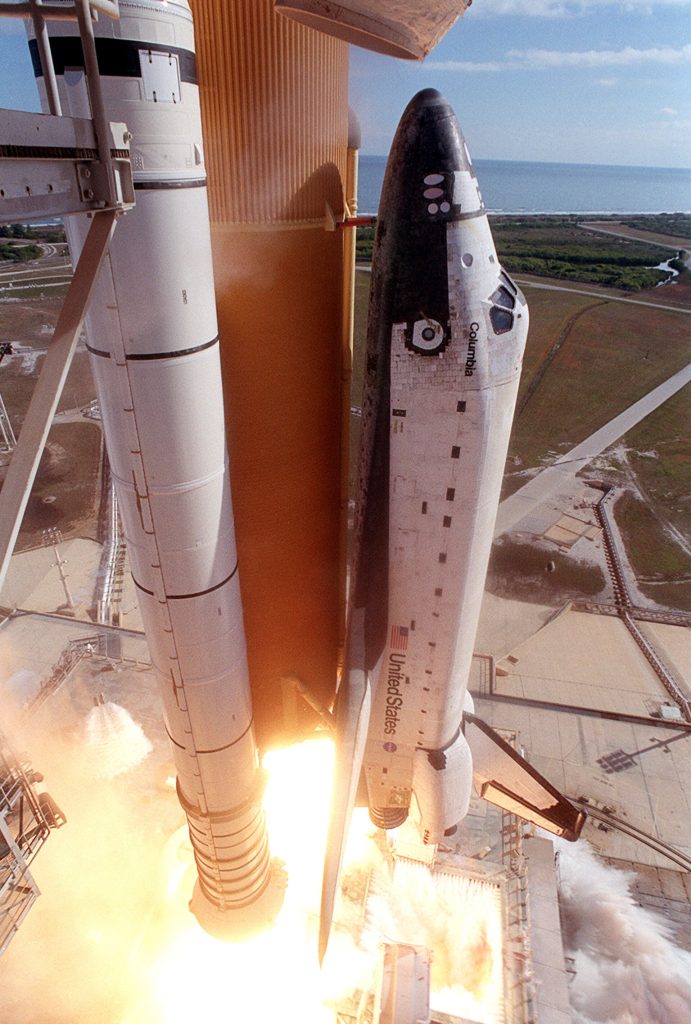
The crew entered the orbiter at about 8:30 a.m. Liftoff appeared flawless, and controllers confirmed the roll program and the throttle-down. At one minute, 15 seconds, velocity was 2,900 feet per second at an altitude of 9 nautical miles. Moments later the flight director spoke of an obvious major malfunction, and the range safety officer reported that the vehicle had exploded. Recovery forces were scrambled.
That afternoon at 5 p.m., President Ronald Reagan addressed the nation and named the seven crew members.
Recovery
Recovery operations in the Atlantic involved more than 16 naval vessels, including the USS Preserver and USS Crapple, along with aircraft, submersibles and Navy divers. The water was over 1,200 feet deep in places. In early March 1986, divers found remnants of the crew compartment. By the end of recovery, over 118 tons of material had been retrieved, roughly 30 percent of the orbiter, and it was taken to Hangar AF at Cape Canaveral Air Force Station.
The investigation
Reagan announced the Rogers Commission, chaired by William P. Rogers with Neil Armstrong as vice chairman, and asked for a report within 120 days. The commission relied heavily on the wreckage, particularly parts of the right solid rocket booster. It found erosion and soot around one of the joints, indicating that the O-ring seals had failed and allowed hot gases to breach the casing.
During the televised hearings, physicist Richard Feynman put seal material in ice water and showed that after pressure was released it did not stretch back at 32 degrees.
Aftermath
NASA paused all shuttle flights for nearly three years. The solid rocket boosters were redesigned. Part of the debris has been displayed since 2015 in the Forever Remembered exhibit at the Kennedy Space Center Visitor Complex, and the Challenger Memorial at Arlington National Cemetery carries the names of the seven astronauts.
Questions this video answers
When did the Challenger disaster happen?
STS-51-L launched from pad 39B on January 28, 1986, and the shuttle was destroyed 73 seconds after liftoff.
How many people died on STS-51-L?
All seven crew members died.
Who was on the Challenger crew?
Dick Scobee, Michael J. Smith, Judith Resnik, Ellison Onizuka, Ronald McNair, Gregory Jarvis and Christa McAuliffe.
What did the Rogers Commission find?
The Rogers Commission found erosion and soot around a joint of the right solid rocket booster, indicating the O-ring seals had failed and let hot gases breach the casing.
How did Richard Feynman demonstrate the problem?
Richard Feynman put O-ring material in ice water during televised hearings and showed that at 32 degrees it did not spring back after pressure.
Explore related missions
Connected by the topic: Space Shuttle