Columbia STS-107: Five Failures Behind the Foam Strike on the Wing
The short version
Space Shuttle Columbia broke apart over Texas on 1 February 2003 and all seven astronauts were killed. A piece of foam from the left bipod ramp hit the left wing 82 seconds after the 16 January launch. The video lays out five "holes": foam that always fell, flights that always came home, a damage model built for small debris, cancelled requests for images of the wing, and a rescue that was never tried. It cites the investigation board's finding that the foam was the cause and that NASA's culture was just as guilty.
Full written account
Space Shuttle Columbia broke apart over Texas on 1 February 2003, and all seven astronauts were killed. The cause was a piece of foam that weighed less than a kilogram, and NASA had watched foam fall off its shuttles for 22 years. How did a known problem end up unexamined while the crew was still in orbit?
A science mission and a known habit
Columbia was the oldest shuttle in the fleet. Its mission, STS-107, was a science flight: for 16 days the crew worked around the clock in two shifts, running about 80 experiments. Aboard were Ilan Ramon, the first astronaut from Israel, and Kalpana Chawla, born in India, on her second flight. The launch was on January 16th.
The shuttle rode to orbit on a giant orange fuel tank covered in foam insulation to keep its fuel colder than minus 200°. That foam broke off. Foam and debris had been hitting the shuttle since the first flight in 1981, and foam strikes were seen on 65 of the 79 missions with launch photos. Foam from one spot, the bipod ramp, had come off on six earlier flights. The rules said nothing should ever hit the shuttle.
Each safe landing made the risk look smaller
In October 2002, three months before Columbia launched, a chunk from the same bipod ramp hit a booster on Atlantis and left a dent. The shuttle landed safely, and managers called it an accepted risk and kept flying. After Challenger, a sociologist had named this pattern the normalization of deviance: a problem that hasn't killed you yet starts to look normal.
The strike
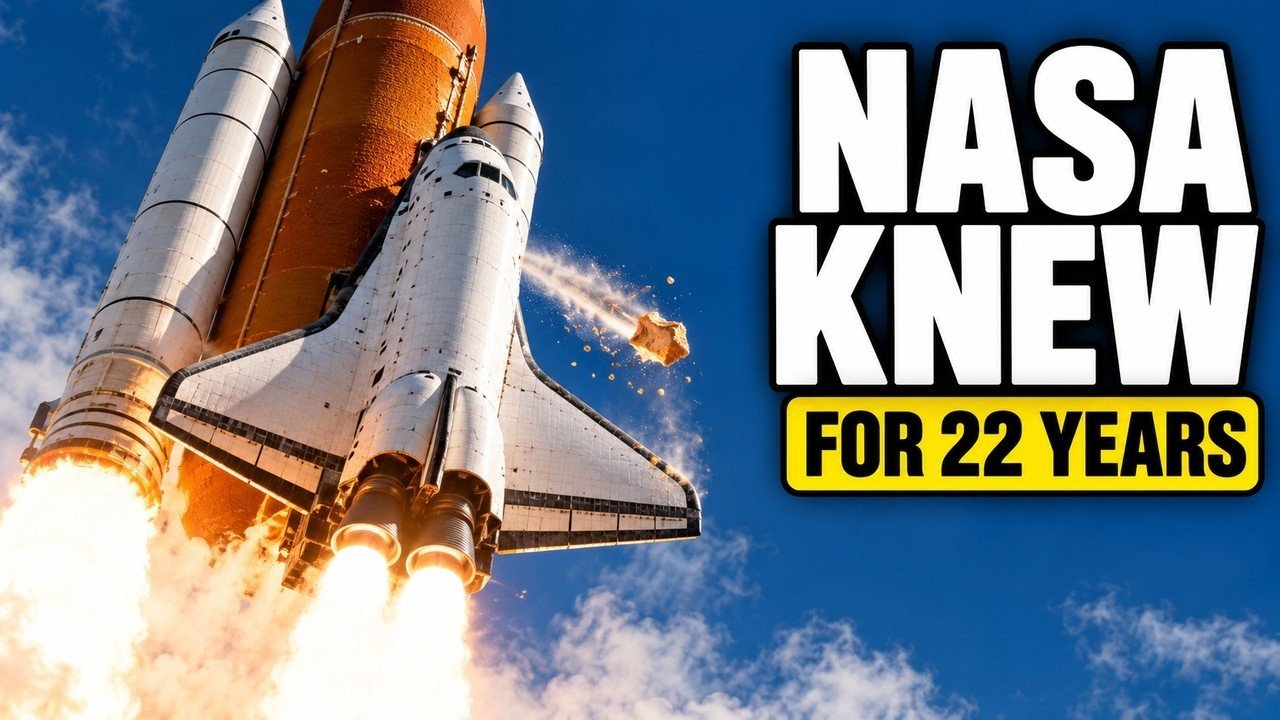
Eighty-two seconds after liftoff, a piece of foam roughly the size of a suitcase broke off the left bipod ramp. Because the shuttle was faster than the speed of sound, the foam slowed almost instantly in the air, and Columbia ran into it. It hit the left wing at more than 800 km an hour. Nobody saw it live; the next day, engineers reviewing the film spotted the strike and were worried.
The impact was on the wing's leading edge, made of reinforced carbon-carbon panels that protect the wing from more than 1,500° during re-entry. To estimate the damage, engineers used a computer model called Crater, which had been built and tested with tiny pieces of debris. This piece was hundreds of times bigger. The model's answer was uncertain, and the engineers' gut feeling was worse.
Requests to look at the wing
Engineers asked for Department of Defense telescopes or satellites to photograph Columbia in orbit. One request reached the Defense Department; about 90 minutes later, NASA canceled it. The manager running the mission said there was no formal requirement for the pictures, and in mission meetings the foam was described as not a safety of flight issue. Engineer Rodney Rocha wrote an angry email quoting NASA's own safety posters ("If it's not safe, say so") but never sent it.
A rescue that was never tried
After the accident, the investigation asked what would have happened if NASA had known. Columbia had enough supplies to stay in orbit until about February 15th, and Atlantis was already being prepared for its next launch. The board called a rescue mission challenging but feasible, though very risky. A spacewalk repair was also possible, with a lower chance of working. Because no one confirmed the damage, no one tried.
Re-entry and the findings
On February 1st, hot gas poured through a hole in the left wing during re-entry. Sensors inside the wing failed one by one, mission control saw strange readings, and then tires reported low pressure. At 8:59 and 32 seconds the signal was lost. Columbia broke apart over Texas at more than 18 times the speed of sound; the crew had no chance to survive.
Thousands of people searched East Texas and Louisiana and recovered almost 84,000 pieces. Two searchers died when their helicopter crashed. In July 2003, investigators fired a block of foam at a real wing panel at about 800 km an hour, and it blew a hole 40 cm wide.
The investigation board said the foam was the cause, but that NASA's culture was just as guilty, citing a broken safety culture with the same organizational failures that caused Challenger 17 years before. Shuttles flew again in 2005 with new cameras on every launch and inspections of the wing in orbit. The shuttle program ended in 2011.
Questions this video answers
What caused the loss of Columbia?
A piece of foam broke off the left bipod ramp 82 seconds after liftoff and hit the left wing. The investigation board said the foam was the cause and that NASA's culture was just as guilty.
How many astronauts died?
All seven astronauts were killed.
Could Columbia have been rescued?
The board called a rescue mission challenging but feasible. Columbia had supplies to stay in orbit until about February 15th, and Atlantis was already being prepared for its next launch. A spacewalk repair was also possible, with a lower chance of working.
What did the July 2003 test show?
Investigators fired a block of foam at a real wing panel at about 800 km an hour and it blew a hole 40 cm wide.
What is the normalization of deviance?
A sociologist's term, applied after Challenger, for a problem that hasn't killed you yet starting to look normal.
Explore related missions
Connected by the topic: Space Shuttle