Hubble Servicing Mission 4: From Cancellation to Final Repair
The short version
Servicing Mission 4 was the fifth and final servicing of the Hubble Space Telescope. Originally planned for 2004, it was cancelled after the loss of Columbia and later reinstated. Astronauts installed Wide Field Camera 3 and the Cosmic Origins Spectrograph and repaired ACS and STIS, among other work.
Full written account
Servicing Mission 4, the fifth and final servicing of the Hubble Space Telescope, was cancelled once before it flew. It was originally planned for 2004 to bring Hubble's scientific equipment to peak performance and keep it operational as long as possible, since it was to be the last servicing mission.
Cancellation after Columbia
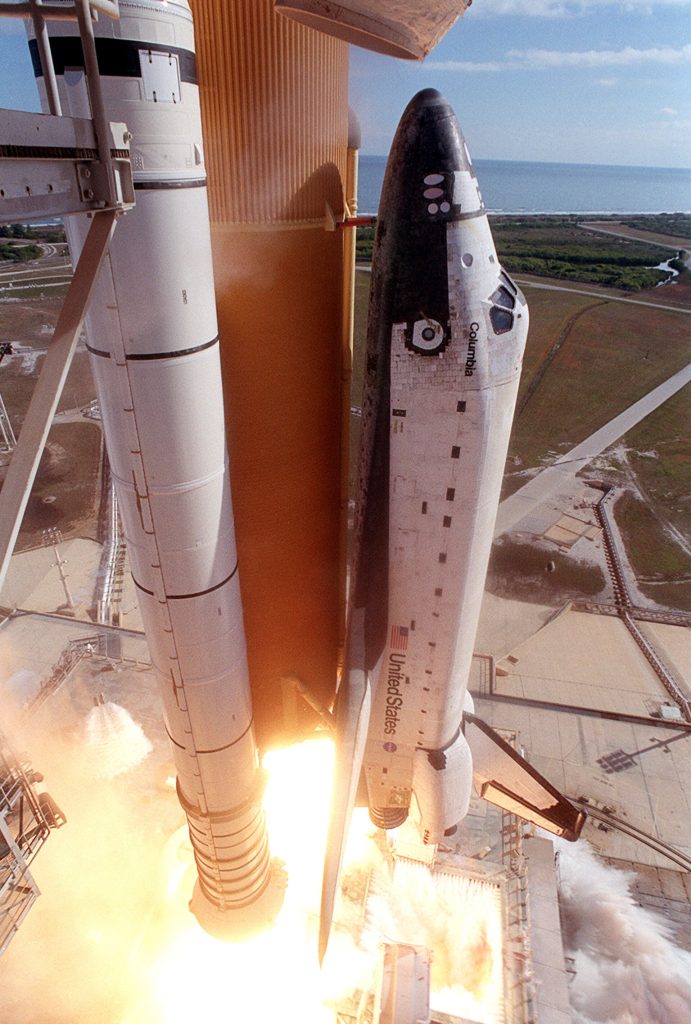
Early in preparations, the crew of Space Shuttle Columbia was lost on re-entry through Earth's atmosphere on the way home. Soon afterward, former NASA administrator Sean O'Keefe cancelled Hubble's final servicing mission over concerns about the safety of Hubble servicing astronauts.
NASA tried a remote robotic servicing mission instead, but concluded it would be too expensive and would not be developed in time to be useful to Hubble before it became non-operational.
Reinstatement
In an announcement, NASA said that just under three years earlier it had cancelled shuttle servicing mission 4, and that it would now add a shuttle servicing mission to the manifest to be flown before the shuttle retires. Servicing Mission 4 was reinstated.
New instruments
The astronauts were first tasked with installing Wide Field Camera 3. One bolt stood in the way of the installation. The panchromatic camera would let astronomers better understand galaxy evolution, dark matter and dark energy.
Next came the Cosmic Origins Spectrograph, the most sensitive spectrograph ever flown on Hubble, allowing a look further into the ultraviolet spectrum.
Repairs in orbit
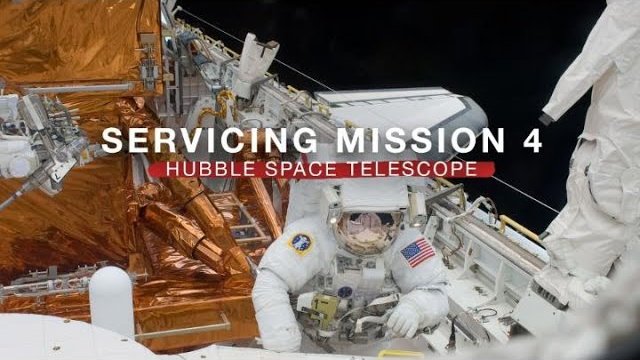
The Advanced Camera for Surveys (ACS) and the Space Telescope Imaging Spectrograph (STIS) needed repair following recent failures, though neither was designed to be repaired in space. Astronauts opened both instruments. The ACS repair went well. For STIS, a handrail had to be removed first, but a screw on it was stripped. After quick thinking by engineers on the ground, astronaut Mike Massimino used brute force to pull the handrail off and reach STIS. The STIS repair was a success.
Other work
The astronauts also replaced gyroscopes, batteries and a failed computer, installed new thermal blankets, and added a soft capture mechanism to let a future robotic spacecraft dock with Hubble and send it to its final resting place when its mission is over.
Questions this video answers
Why was Servicing Mission 4 cancelled?
After the loss of Space Shuttle Columbia, then NASA administrator Sean O'Keefe cancelled it over concerns about the safety of the servicing astronauts.
What new instruments were installed?
Wide Field Camera 3 and the Cosmic Origins Spectrograph.
Which instruments were repaired?
The Advanced Camera for Surveys (ACS) and the Space Telescope Imaging Spectrograph (STIS).
What is the soft capture mechanism for?
It allows a future robotic spacecraft to dock with Hubble and send it to its final resting place when its mission is over.
Explore related missions
Connected by the topic: Space Shuttle