Hubble Servicing Mission 4
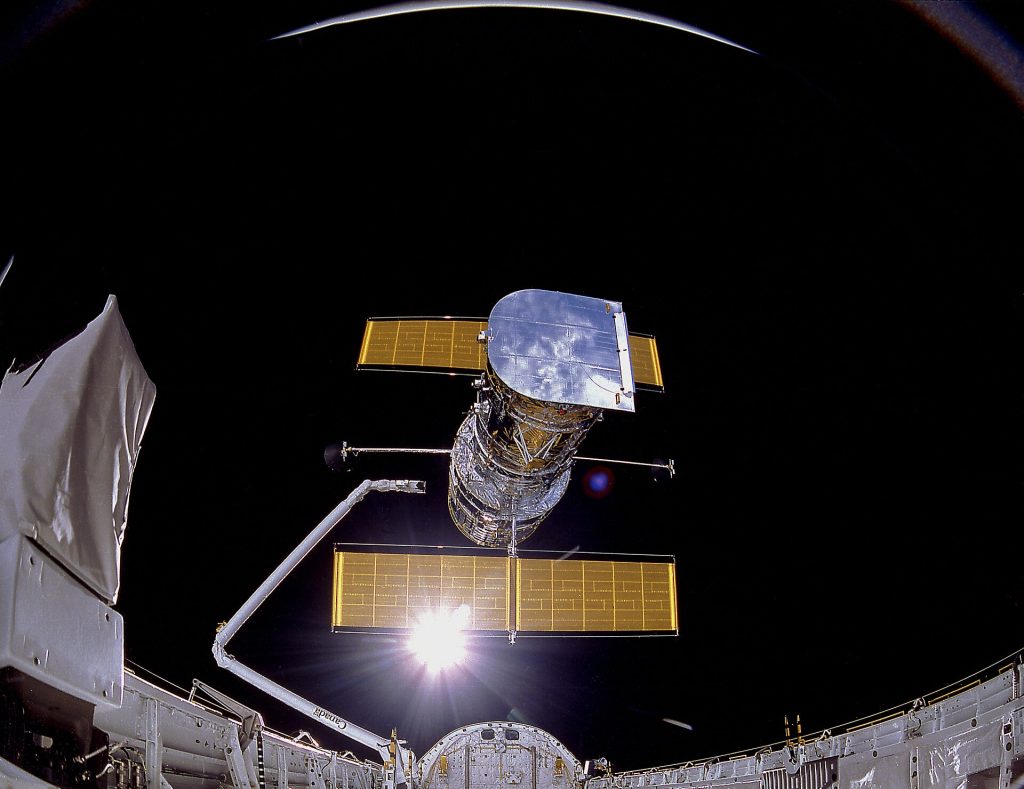
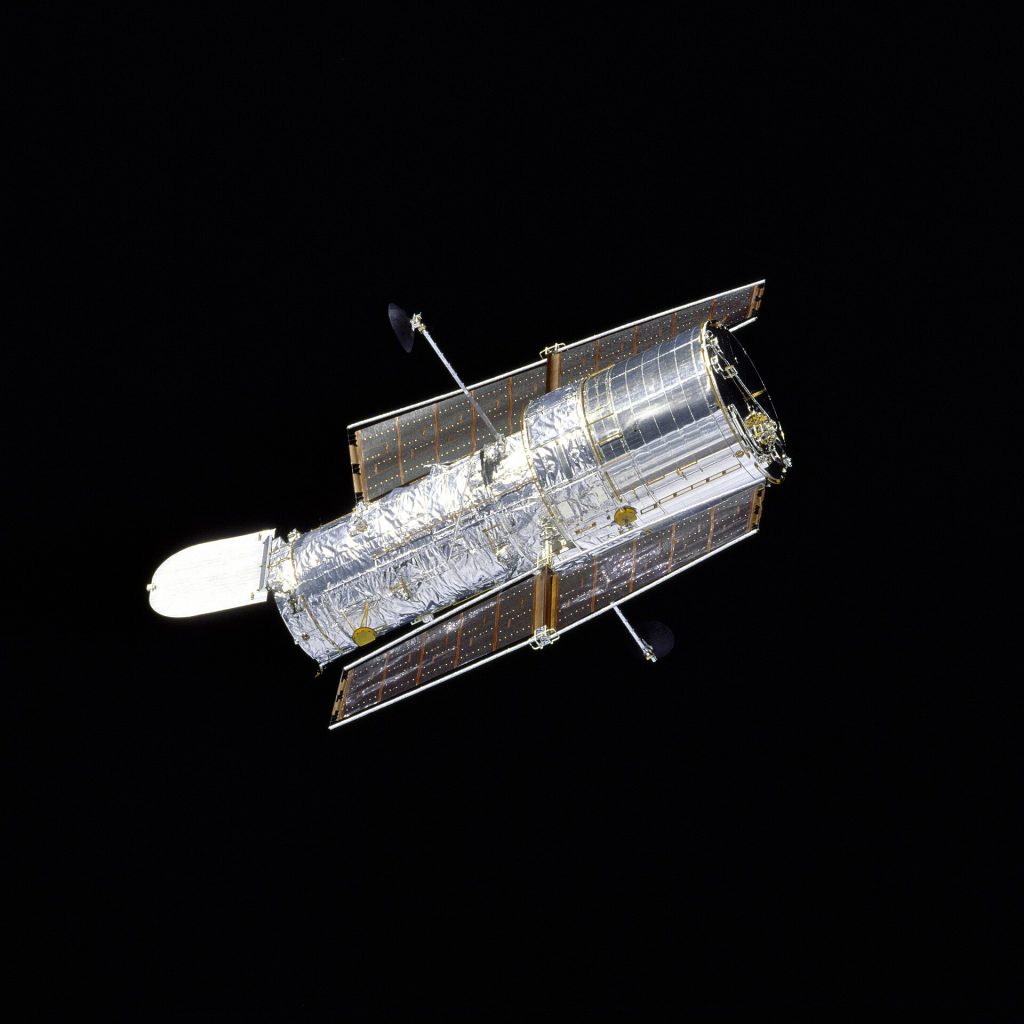
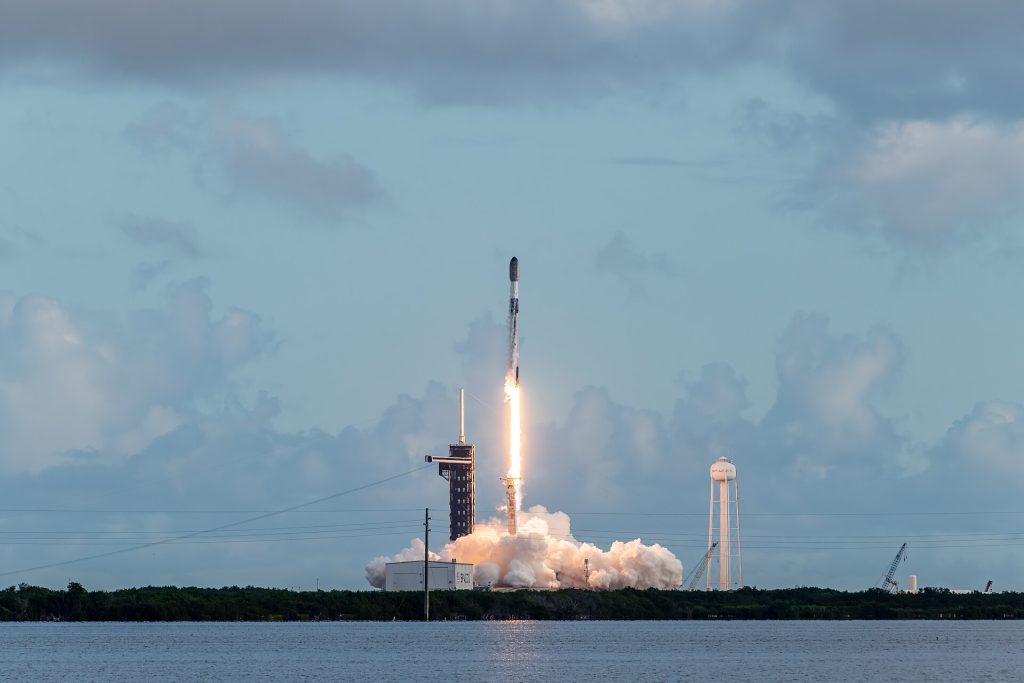
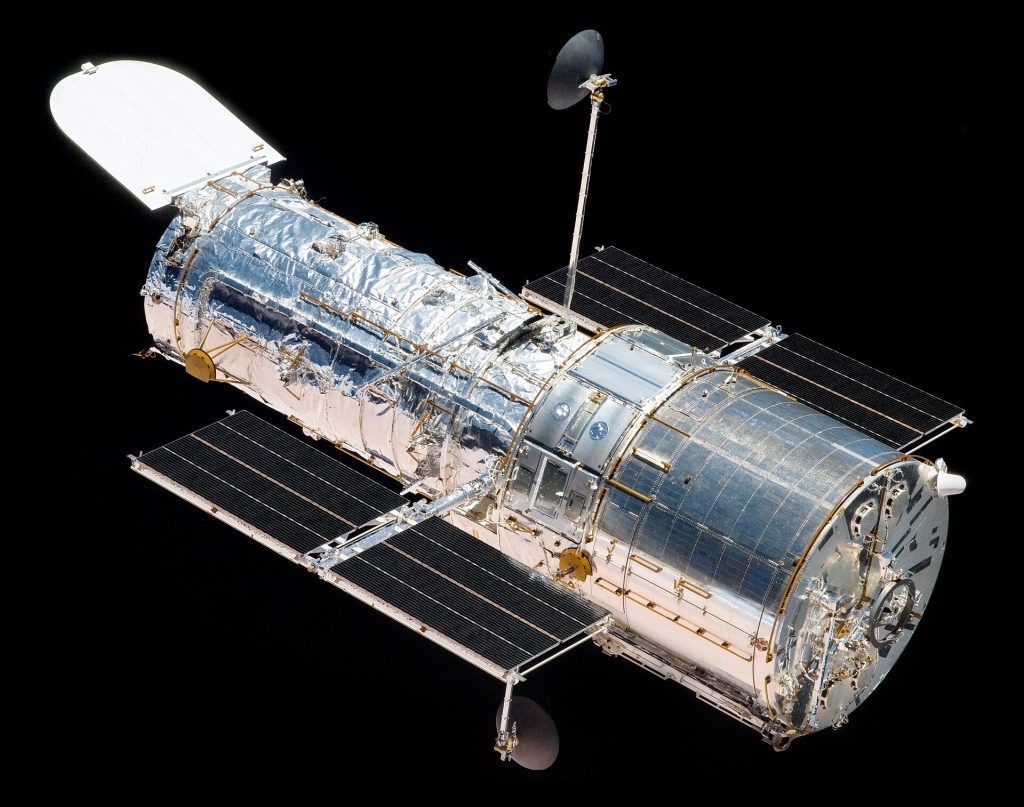
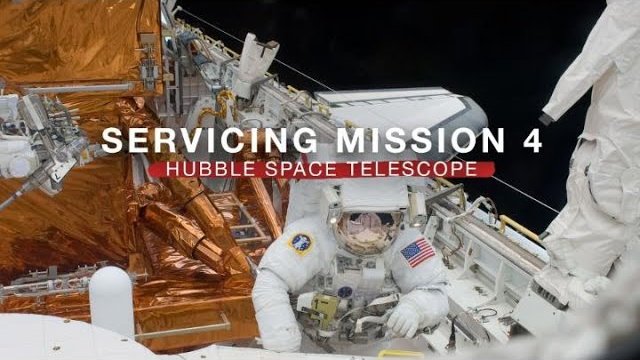
Servicing Mission 4 was the fifth and final astronaut visit to the Hubble Space Telescope, flown by Space Shuttle Atlantis as STS-125 from 11 May 2009. Seven astronauts installed two new instruments, repaired two failed ones in orbit for the first time, and replaced the gyroscopes and batteries that keep Hubble working.
What happened
-
Watch this moment · 0:56
The final visit is planned, then cancelled
Servicing Mission 4 was originally planned for 2004 to bring Hubble's science instruments to peak performance. It was to be the last servicing mission.
-
Watch this moment · 1:28
Cancellation
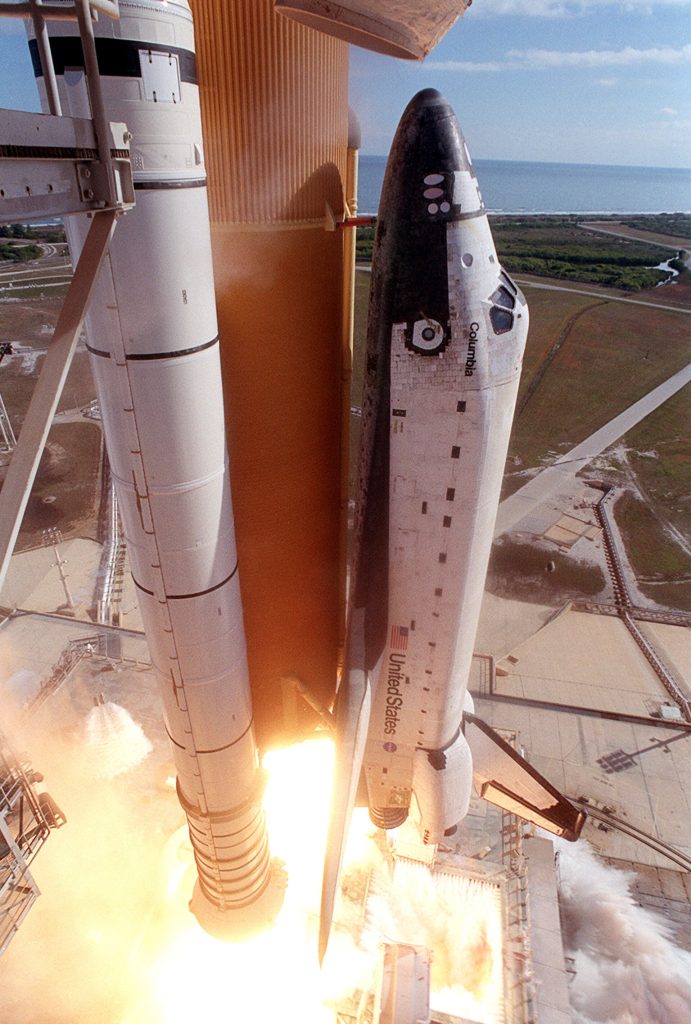
After the loss of Columbia, then NASA administrator Sean O'Keefe cancelled the mission over concerns about the safety of the servicing astronauts. NASA looked at a remote robotic mission but concluded it would be too expensive and too slow to help Hubble.
-
Watch this moment · 3:06
Reinstated
NASA said it would add a shuttle servicing mission to the manifest before the shuttle retired. Servicing Mission 4 was back on.
-
Watch this moment · 0:18
What the crew had to do
The explainer put the load at about 22,000 pounds of hardware for seven astronauts, to be fitted across five spacewalks. The speakers said the mission could buy Hubble another five, perhaps ten, years.
-
Watch this moment · 4:09
Wide Field Camera 3
The astronauts first installed Wide Field Camera 3. One bolt stood in the way of the installation. The camera was meant to help astronomers understand galaxy evolution, dark matter and dark energy.
-
Watch this moment · 4:43
Cosmic Origins Spectrograph
Next came the Cosmic Origins Spectrograph, called the most sensitive spectrograph ever flown on Hubble, which looks further into the ultraviolet.
-
Watch this moment · 5:18
Repairing instruments in place
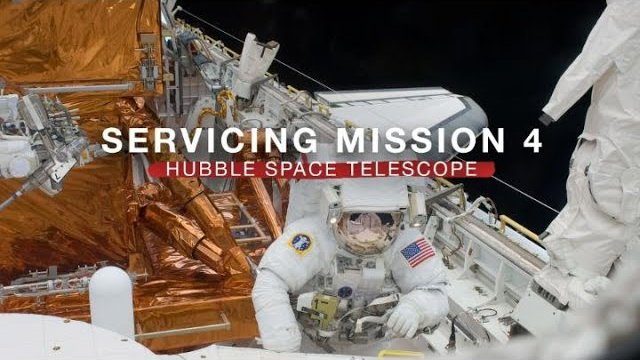
Neither the Advanced Camera for Surveys nor the Space Telescope Imaging Spectrograph was designed to be repaired in space. Reaching the camera's board meant removing 110 small screws, per video 294. For STIS, a handrail had to come off first, and a screw on it was stripped, so Mike Massimino used brute force to pull it off after advice from engineers on the ground.
-
Watch this moment · 5:57
Gyroscopes, batteries and a capture ring
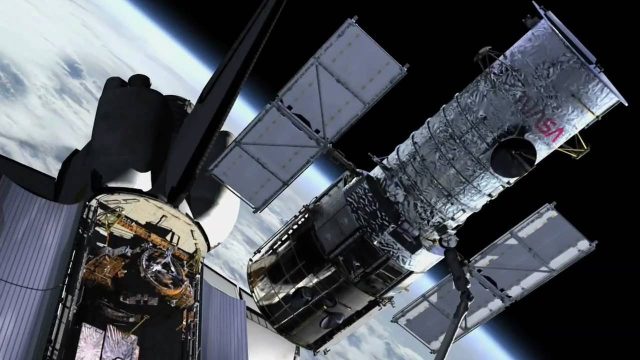
The crew also replaced gyroscopes, batteries and a failed computer, added new thermal blankets, and fitted a soft capture mechanism so that a future robotic spacecraft could dock with Hubble and send it to its final resting place.
Key facts
| Vehicle | Hubble Space Telescope, Space Shuttle |
|---|---|
| Mission name | Hubble Servicing Mission 4 |
| Launch site | Kennedy Space Center |
| Crew size | 7 |
| Duration | 12 days |
| Outcome | Success |
Videos about this mission
The videos, in date order
Drag, zoom or press play to watch them on this page.
January 2009 – May 2021
Drag to explore dates · Select a video to preview.
Dates are when each video was first published on YouTube.
Why a last visit mattered
Hubble was serviced by shuttle astronauts four times before this mission. Servicing Mission 4 was billed in video 294 as "our last shot": after it, no shuttle would return. The mission description said it was originally planned for 2004 and postponed after the loss of Columbia, and that the astronauts had made a conscious decision to take the risk.
Five spacewalks
The mission flew on Space Shuttle Atlantis as STS-125, which launched on 11 May 2009 and landed on 24 May at Edwards Air Force Base, according to the public record of the flight. The crew were Scott Altman, Gregory C. Johnson, Michael Good, Megan McArthur, John Grunsfeld, Mike Massimino and Andrew Feustel.
Two new instruments were added and two were repaired. The Advanced Camera for Surveys had been the most heavily used instrument on Hubble before it failed, and video 294 notes it made the first detection and chemical analysis of the atmosphere of a planet around another star. A refurbished fine guidance sensor, one that had flown on Hubble before, was fitted too.
What came next
The soft capture mechanism fitted on this flight is for the end of Hubble's life: it lets a future spacecraft dock with the telescope and move it out of orbit. The repairs showed that instruments could be mended in orbit, which video 294 says would point the way to repairing instruments in space in the future. No shuttle has serviced Hubble since, and the shuttle fleet retired in 2011.
Questions and answers
Why was Servicing Mission 4 cancelled?
After the loss of Columbia, NASA administrator Sean O'Keefe cancelled it over concerns about the safety of the servicing astronauts. It was reinstated just under three years later.
What was installed?
Wide Field Camera 3 and the Cosmic Origins Spectrograph, plus new gyroscopes, batteries, a refurbished fine guidance sensor, thermal blankets and a soft capture mechanism.
What was repaired?
The Advanced Camera for Surveys and the Space Telescope Imaging Spectrograph, neither of which was designed to be repaired in space.
Which shuttle flew it?
Atlantis, as STS-125, launching on 11 May 2009 according to the public mission record.
Has anyone serviced Hubble since?
No. This was the fifth and final servicing mission, and the Space Shuttle retired in 2011.
Sources: The facts and written text on this page come from the 2 videos on this page, by Plasma Ben, NASA Goddard.