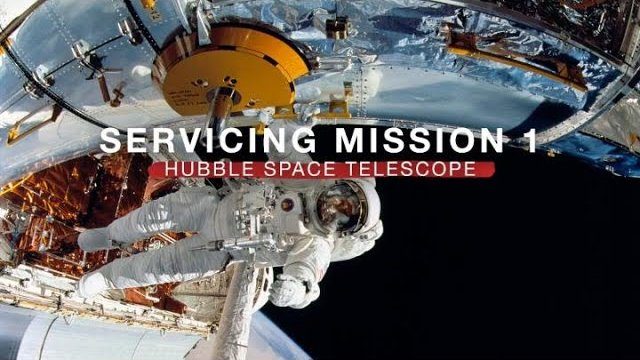
Hubble Servicing Mission 1
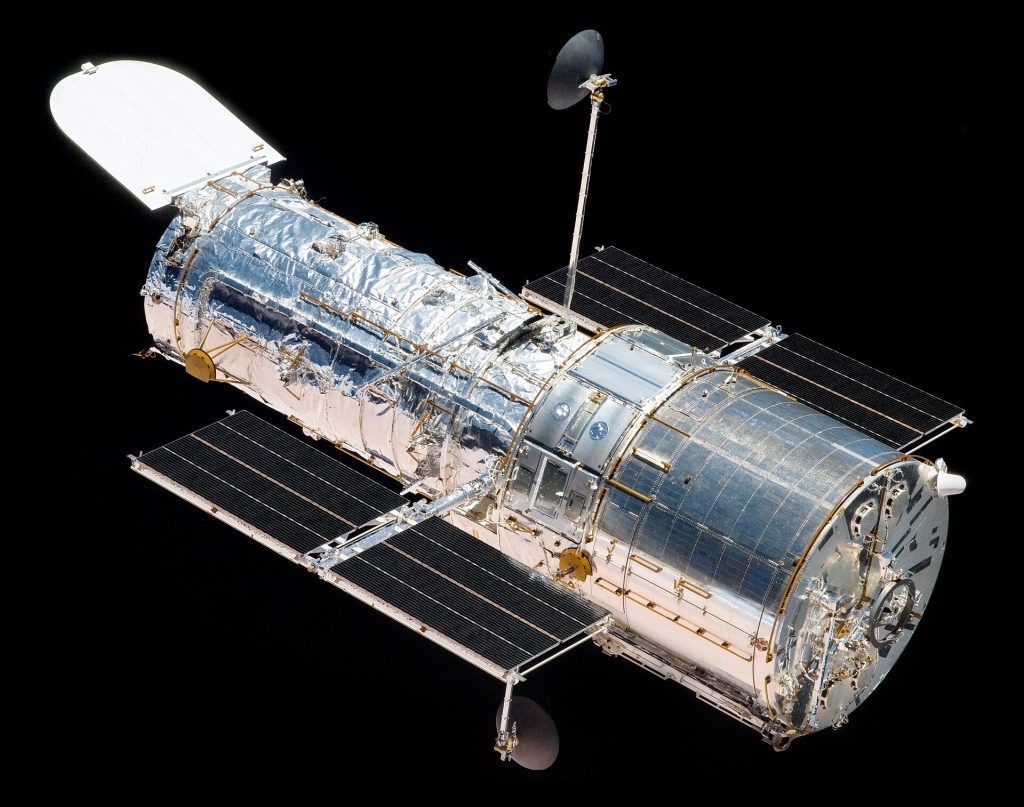
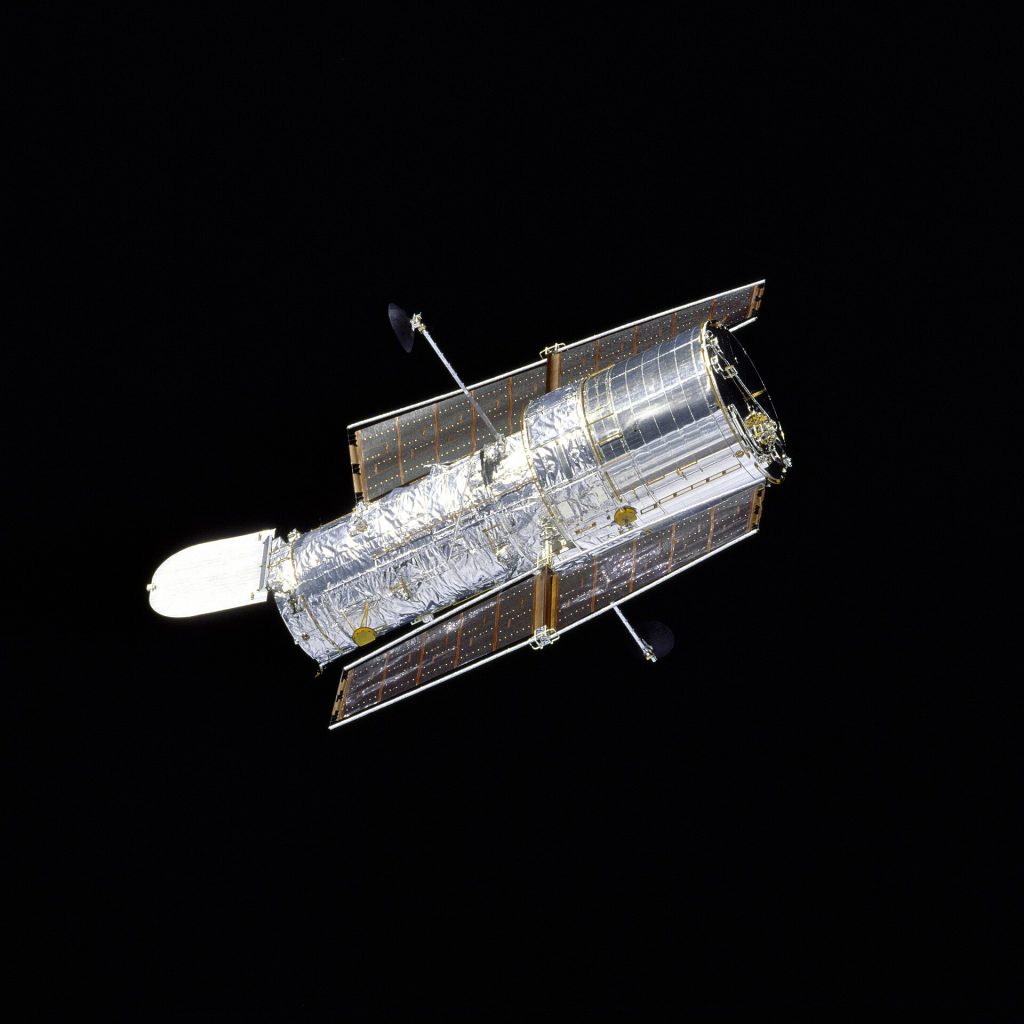
On 2 December 1993 the shuttle Endeavour lifted off on STS-61, carrying seven astronauts to repair the Hubble Space Telescope, whose main mirror had been ground to the wrong shape. Over five spacewalks the crew fitted corrective optics, a new camera, new solar arrays and new gyroscopes, and the telescope began to deliver sharp images.
What happened
-
Watch this moment · 1:30
April 1990approximately
Hubble is launched with a flawed mirror
The telescope was carried into orbit by the shuttle Discovery. Its first images showed that the 2.4-metre primary mirror had been made to the wrong shape, and the press called it a billion-dollar mistake.
-
Watch this moment · 2:39
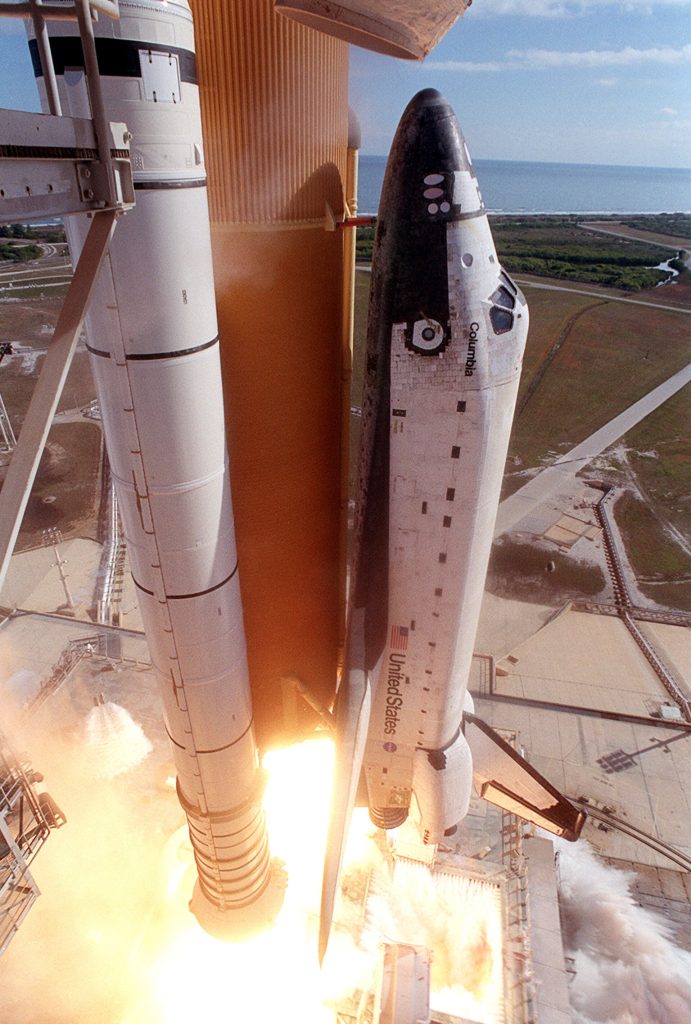
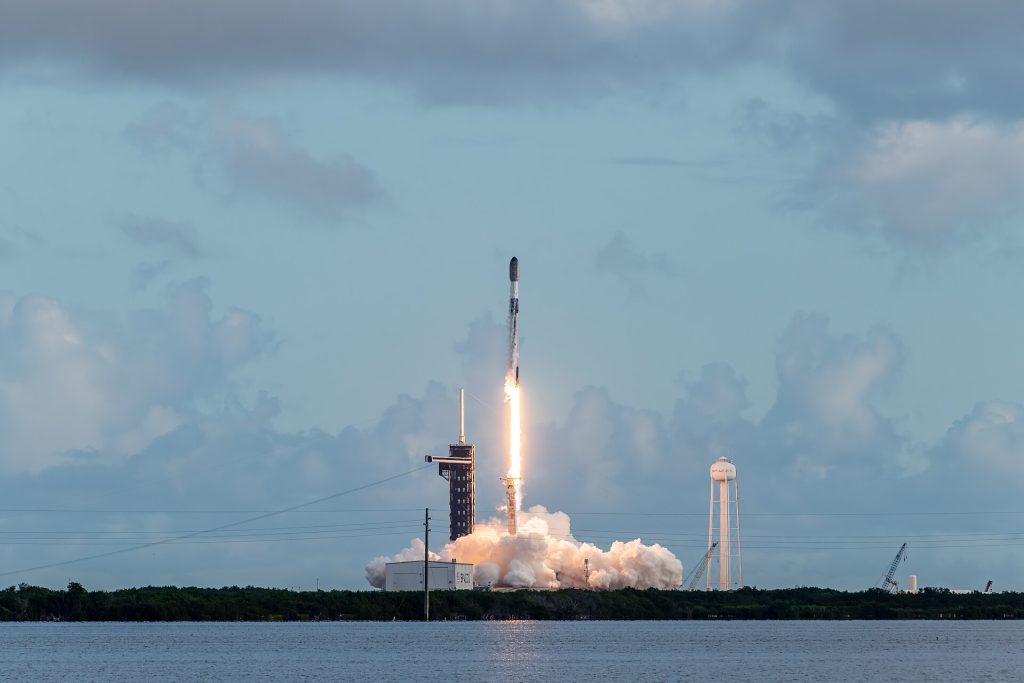
Endeavour lifts off
Endeavour launched on the first of the Hubble servicing flights with a crew of seven.
-
Watch this moment · 2:53
Early in the flightapproximately
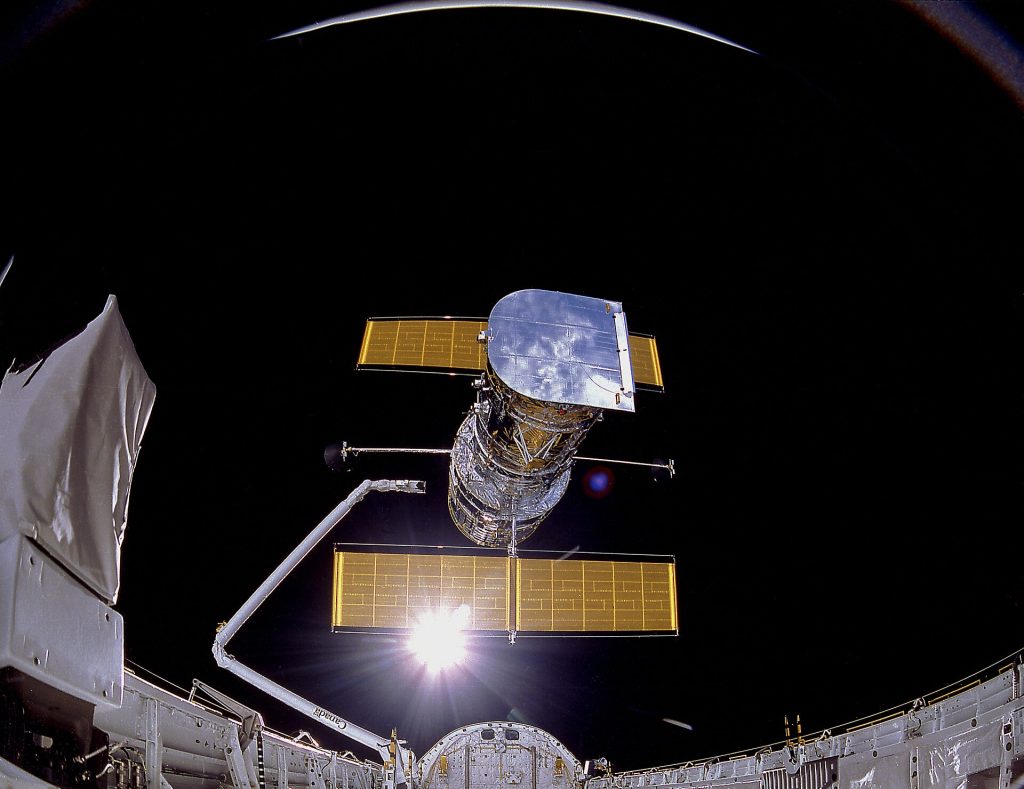
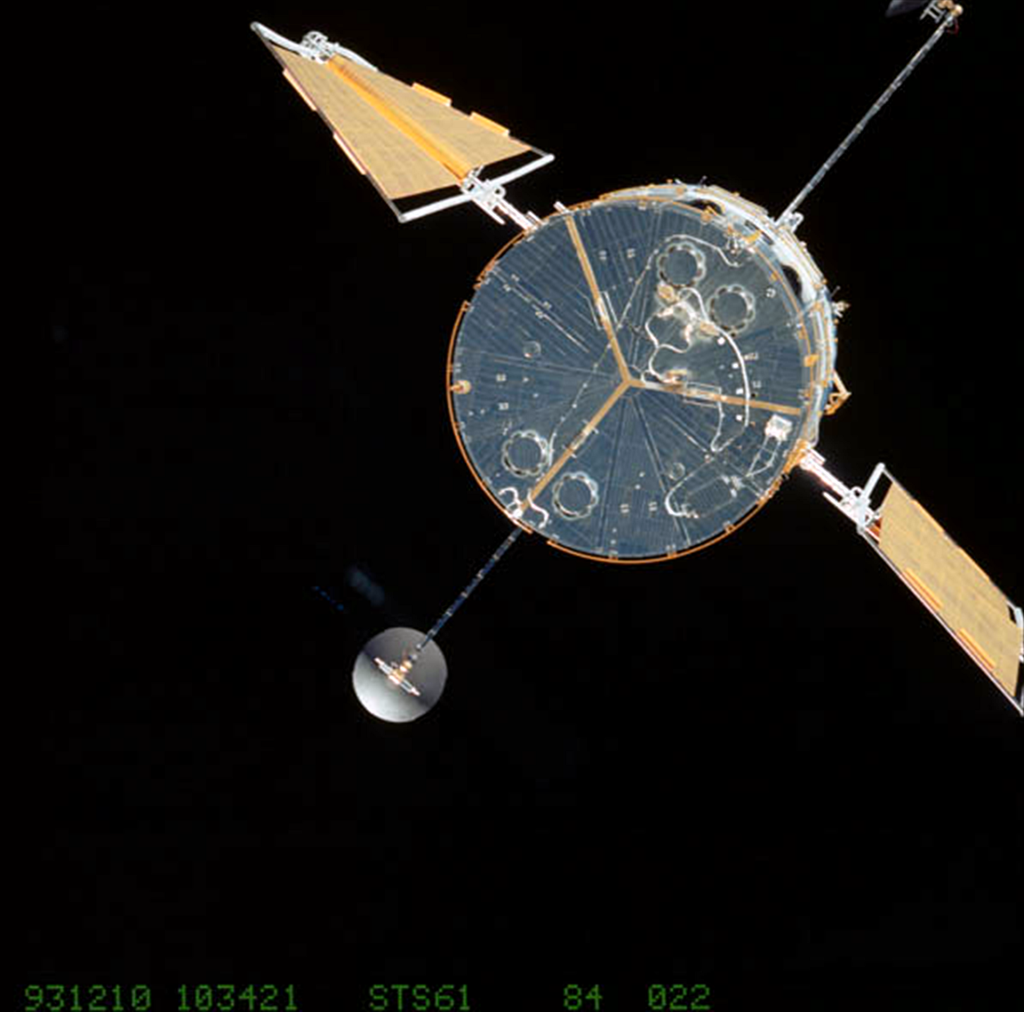
Capture of the telescope
The crew captured Hubble with the shuttle's robotic arm and berthed it in Endeavour's payload bay, where they could reach the instruments and handrails.
-
Watch this moment · 2:53
Over five daysapproximately
Five spacewalks
The astronauts replaced the failing gyroscopes and the magnetometers, installed new solar arrays, and fitted Wide Field Planetary Camera 2 in place of the original camera. The new camera had its own mirrors built to cancel the error in the main mirror.
-
Watch this moment · 3:30
During the spacewalksapproximately
COSTAR goes in
Video 41 tells how Kathryn Thornton removed the High Speed Photometer and slid in the Corrective Optics Space Telescope Axial Replacement, or COSTAR. Video 41 describes it as a phone-booth-sized box of small mirrors on motorized arms that corrects the light for the other instruments.
-
Watch this moment · 3:48
Mission endapproximately
Hubble is released
With the work finished and Hubble running again, the crew released the telescope back into orbit, and Endeavour returned to Earth. Calibration of the new instruments took a few more weeks.
-
Watch this moment · 39:50
Early 1994approximately
First corrected images
The first pictures from the repaired Hubble were sharp, and NASA announced that the repair had succeeded.
Key facts
| Vehicle | Space Shuttle |
|---|---|
| Mission name | Hubble Servicing Mission 1 |
| Launch site | Kennedy Space Center LC-39B |
| Crew | Richard O. Covey, Ken Bowersox, Story Musgrave, Jeffrey A. Hoffman, Kathryn C. Thornton, Claude Nicollier, Thomas Akers |
| Crew size | 7 |
| Duration | 10 days, 19 hours |
| Outcome | Success |
Videos about this mission
The videos, in date order
Drag, zoom or press play to watch them on this page.
December 2020 – October 2021
Drag to explore dates · Select a video to preview.
Dates are when each video was first published on YouTube.
Built to be serviced
Hubble was designed to be worked on in orbit. It carried handrails, and its instruments were made to be pulled out and replaced. NASA expected to refresh its science instruments and repair parts that wore out. That design is what made the repair possible at all.
The flaw was not a failure of the mirror's surface. Charlie Pellerin, the NASA manager interviewed in video 41, says the mirror was perfect but ground to the wrong prescription. The error at its edge was about one-fiftieth the width of a human hair.
What the crew did
The crew of seven were Richard O. Covey, Ken Bowersox, Story Musgrave, Jeffrey A. Hoffman, Kathryn C. Thornton, Claude Nicollier and Thomas Akers. Nicollier flew for the European Space Agency.
The work was divided over five spacewalks, called EVAs. In order of purpose, the crew:
- replaced the gyroscopes that point the telescope, two of which were failing
- swapped the magnetometers
- installed new solar arrays that no longer flexed as Hubble moved in and out of sunlight, which had been disturbing its pointing
- installed Wide Field Planetary Camera 2, the camera with 48 filters from ultraviolet to visible
- replaced the High Speed Photometer with COSTAR
The crew could not test the optics before leaving, because the calibration needed Hubble to be back in free flight. They went home without knowing for sure that it had worked.
What changed afterwards
The repair turned Hubble from a punch line into the most productive observatory of its age. Four more servicing missions followed, the last in 2009. Video 39 tells how the final one was cancelled after the loss of Columbia, because the shuttle could not reach a safe haven at the International Space Station from Hubble's orbit, and then restored.
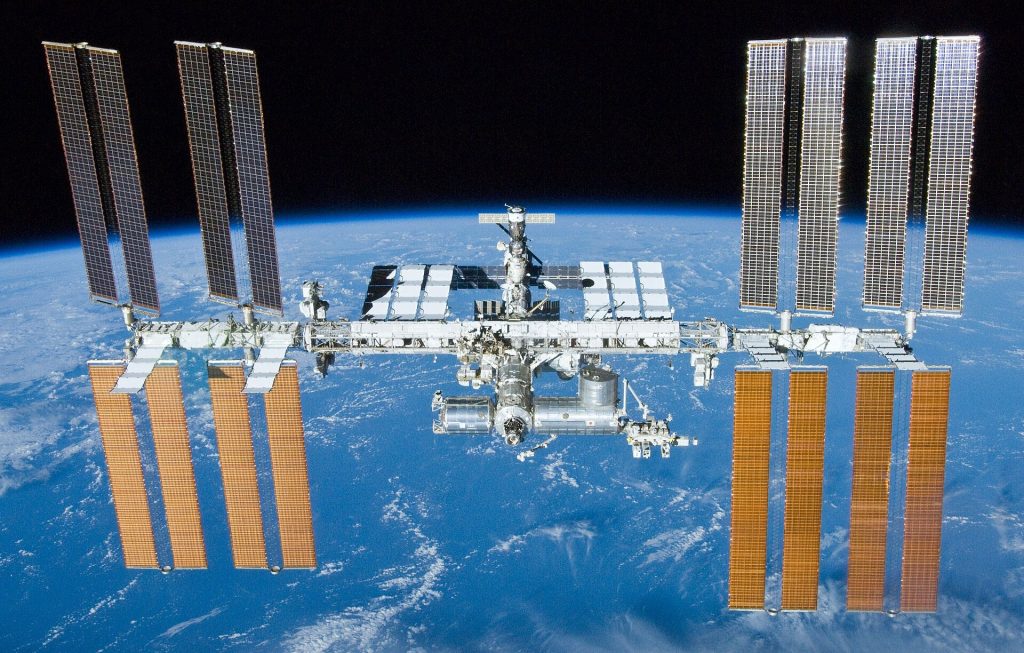
Servicing Mission 1 also showed that the shuttle could do precise work on a delicate instrument. That lesson was carried into the assembly of the International Space Station.
Questions and answers
What was wrong with the Hubble Space Telescope?
Its main mirror had a spherical aberration. It was made to the wrong shape, so light from a point did not come into a single sharp focus. The mirror was polished very precisely, but to the wrong prescription.
What is COSTAR?
The Corrective Optics Space Telescope Axial Replacement is a device that works like a pair of eyeglasses. It holds small mirrors that correct the light before it reaches the telescope's other instruments. Wide Field Planetary Camera 2 had its own corrections built in.
Who flew on the first Hubble servicing mission?
Richard O. Covey, Ken Bowersox, Story Musgrave, Jeffrey A. Hoffman, Kathryn C. Thornton, Claude Nicollier of ESA and Thomas Akers.
How many servicing missions were there?
Five, between 1993 and 2009. This was the first.
Which shuttle flew it?
Endeavour, on mission STS-61.
Sources: The facts and written text on this page come from the 2 videos on this page, by NASA Goddard, Aviation & Space.