Hubble Space Telescope: The Flawed Mirror and Costar Repair
The short version
This documentary traces how the Hubble Space Telescope was built after the Challenger loss, launched on the shuttle Discovery, and found to have a flawed mirror. It explains the Costar corrective optics and the spacewalk repair, then the discoveries that followed, including deep-field galaxy counts and a March 2016 image of a galaxy from 400 million years after the Big Bang.
Full written account
On March 4th, 2016, NASA released an image of a red dot: an entire galaxy whose light took 13.4 billion years to reach us, a view of the universe at a mere three percent of its current age. It came from the Hubble Space Telescope, a project that began as a way to settle a question ground-based telescopes could not.
A telescope meant to measure the universe
Ground-based measurements of the universe's expansion left uncertainty in its age. Hubble was meant to solve that. It also arrived at a time of mourning in 1986, after seven crew members were lost aboard the space shuttle Challenger, and speakers describe it as the project meant to show NASA could still do hard things. Charlie Pellerin was in charge of the mission.
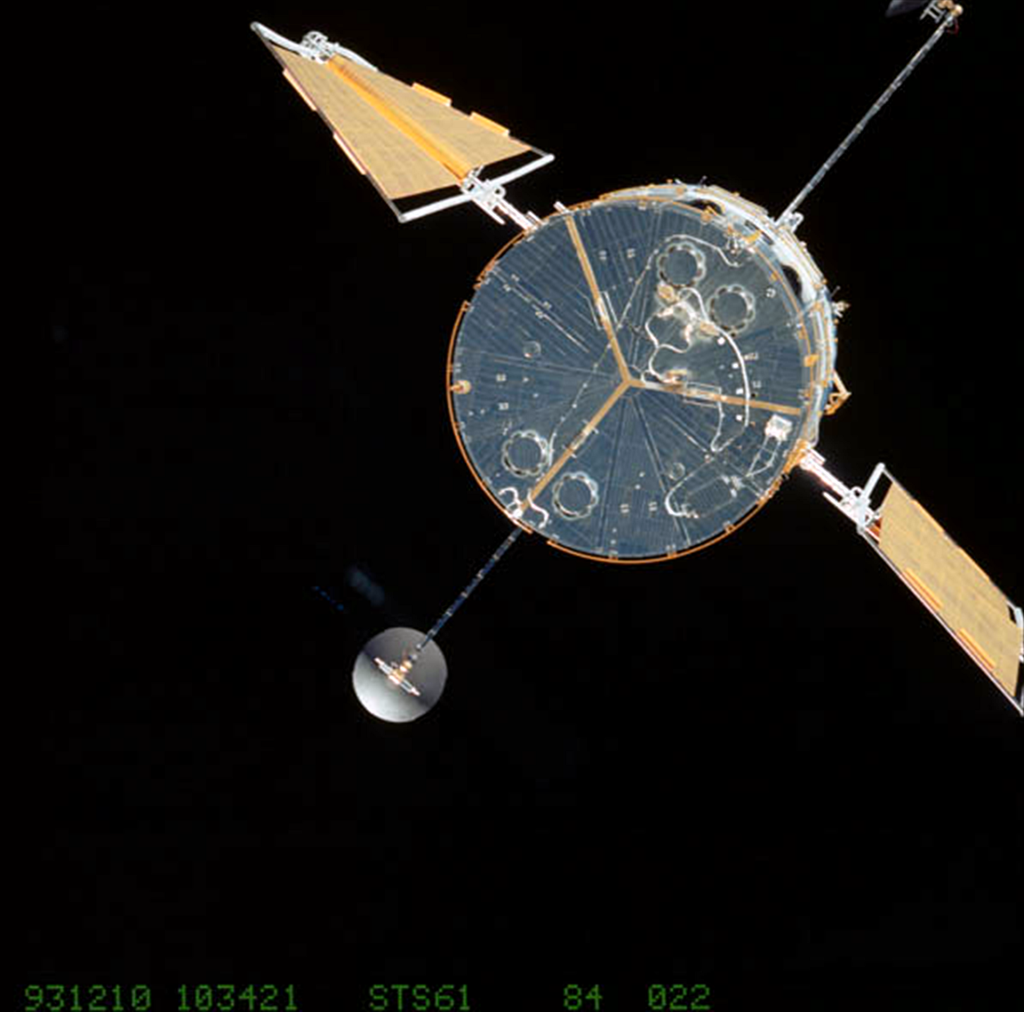
The case for going to space was Earth's atmosphere, whose irregularities make stars appear to twinkle. But Hubble would orbit at almost five miles per second, so it needed perfect stability. The team equipped it with six gyroscopes, each with a wheel spinning 320 times per second. The project had cost almost $2 billion and 15 years. Hubble launched aboard the space shuttle Discovery and was released from it.
First light and a flawed mirror
About two months later came first light. Pellerin saw a fuzzy spot, and chief engineer Gene Oliver said a stepping motor could be driven to bring it into focus. Pellerin left on a trip overseas. On his return, his boss called and told him Hubble had been launched with a spherically aberrated mirror, and a national newspaper headline called it a national disaster.
The mirror is two and a half meters across, about eight feet. It was not the right shape; the error at its edge was described as about a 50th of a human hair. Pellerin said the mirror was perfect but ground to the wrong prescription. Hubble became the subject of jokes, and Pellerin said he believed his reputation was ruined.
Eyeglasses for Hubble
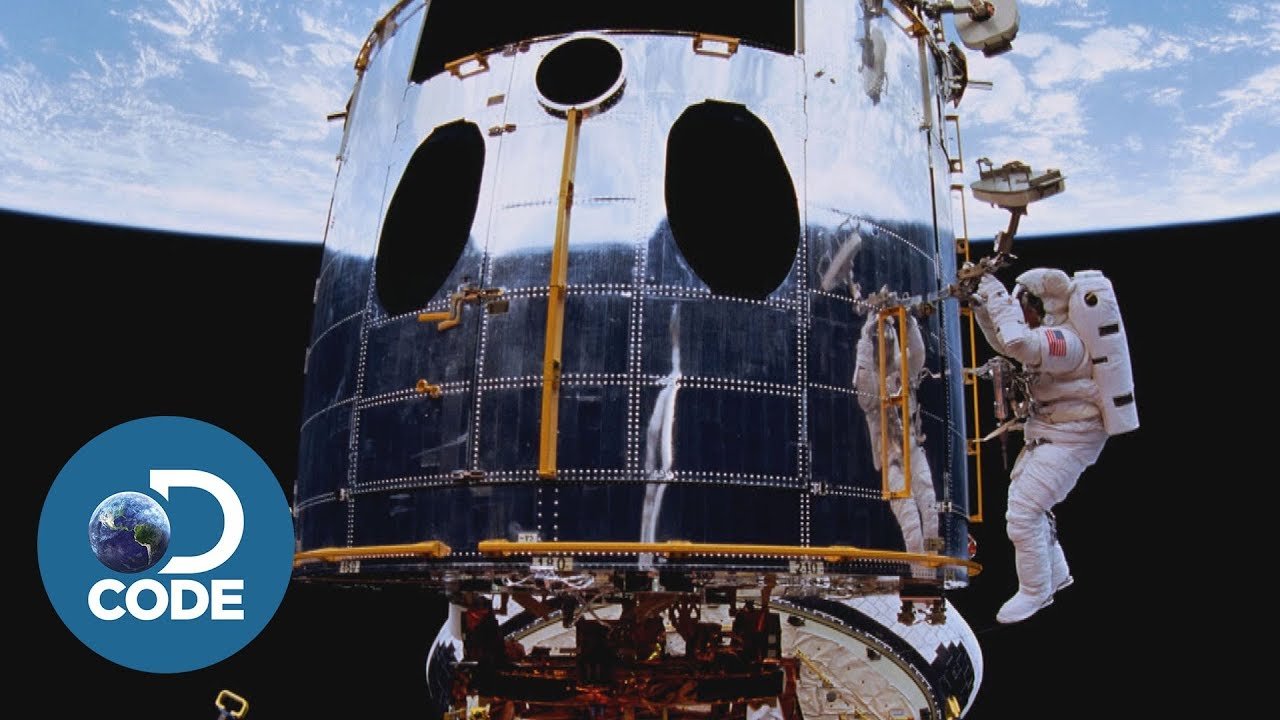
The answer was a machine called Costar, compared to eyeglasses. It contains five pairs of small mirrors on motorized arms that correct the light beam entering the telescope. Hubble's science instruments sit in four bays, and astronaut Kathryn Thornton had to replace one, a high-speed photometer, with Costar. It is the size of a phone booth and, as described, about 700 pounds on Earth, yet she could move it with her fingertips. She had expected it might catch on something, but it slid right in and she felt it hit a stop.
Calibration could not be done until after the crew had left, so they did not know the mission had worked even after landing. Eleven days later, in December 1993, the calibrations were complete and the first images were viewed on monitors.
What Hubble found
Hubble's measurements of expansion were described as fixing the universe's age at about 13.8 billion years. Its reach is on the order of 11 billion light years. Pointed for a month at a blank part of the sky, it revealed thousands of galaxies, about 1500 in that photo according to one speaker. The March 2016 image showed light from a galaxy dating to 400 million years after the Big Bang. It was surprisingly bright, which means galaxies were growing much faster and earlier than previously known. By then Hubble was in its 25th year of science operations.
Questions this video answers
What was wrong with Hubble's mirror?
A mirror that had been ground to the wrong prescription, so light did not focus properly. The mirror's edge error was described as about a 50th of a human hair.
How was the flaw corrected?
Costar, a box containing five pairs of small mirrors on motorized arms that correct the light beam entering the telescope. It replaced the high-speed photometer.
Who installed Costar?
Kathryn Thornton was among the astronauts who installed Costar. She had to replace the high-speed photometer with it.
How did Hubble reach orbit?
Hubble was carried up on the space shuttle Discovery and released from it.
What did Hubble's long stare at blank sky show?
The video says Hubble looked at a blank patch of sky for a month and found thousands of galaxies; one speaker cites about 1500 galaxies in that photo.
Explore related missions
Connected by the topic: Hubble Space Telescope