STS-82: How Discovery’s Crew Gave Hubble Infrared Vision
The short version
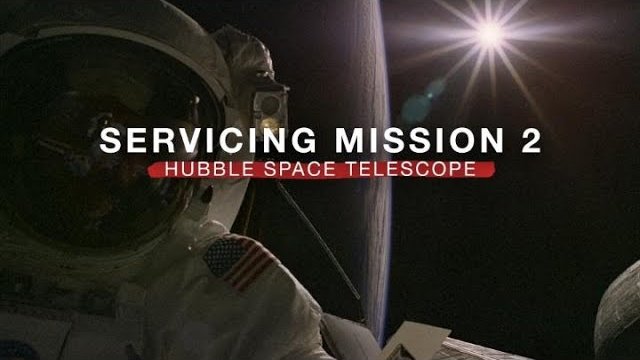
Servicing Mission 2 to the Hubble Space Telescope launched on Feb. 11, 1997, aboard Discovery with a seven-member STS-82 crew. The astronauts installed the Space Telescope Imaging Spectrograph and the Near-Infrared Camera and Multi-Object Spectrometer, extending Hubble's range into the near infrared. They also refurbished and replaced worn components, and the mission is described as making Hubble more scientifically powerful than ever before.
Full written account
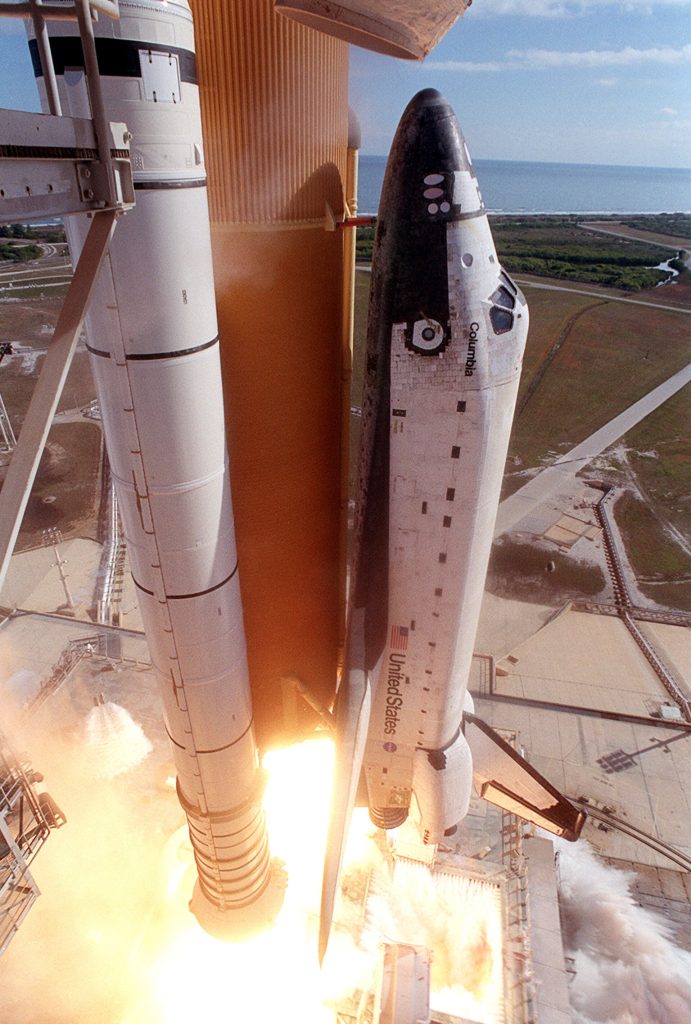
Servicing Mission 2 to the Hubble Space Telescope lifted off aboard Discovery on February 11, 1997, carrying a seven-member STS-82 crew. Before it, Hubble could capture light only within the visible to ultraviolet range; the mission added instruments that pushed its reach into the near infrared.
Why a wider range of light mattered
Up until Servicing Mission 2, Hubble captured only visible to ultraviolet light. Widening that range let astronomers look through distinctly different windows into the cosmos. Hubble was serviced five times over its lifetime, which allowed worn parts to be fixed and new instruments, crafted specifically to enhance its performance, to be added.
Spectroscopy is the technique of separating light into its component colors or wavelengths, which unpacks greater detail about the space around us.
Preparation
NASA spent years going over every detail of the new instruments and trained a team of astronauts in the techniques needed to install them. In one training session, the crew practiced installing a science instrument into the telescope.
The crew and launch
Four astronauts conducted the planned spacewalks: Mark Lee, Gregory Harbaugh, Steven Smith and Joseph Tanner. Kenneth Bowersox was commander, Scott Horowitz was pilot, and Steven Hawley was the Remote Manipulator System operator.
Discovery was described at launch as in a heads-down position on course for a 28.5 degree, 309 nautical mile orbit.
What the crew installed and repaired
- Space Telescope Imaging Spectrograph (STIS): separates ultraviolet and visible light into components, giving scientists diagnostic information about an object's composition, temperature, motion and other physical and chemical properties. Hubble could capture in a single exposure a spectral region 30 times wider than previous spectrographs. Questions about massive black holes, stellar flares, the evolution of the universe and the distribution of matter could be studied in fuller view.
- Near-Infrared Camera and Multi-Object Spectrometer (NICMOS): allowed Hubble to see the universe in infrared light, opening questions such as how stars form, how many stars have planetary systems, and how galaxies form and evolve.
The astronauts also refurbished the fine guidance sensor and gyroscopes, which help point the telescope. They repaired failing thermal blankets that regulate Hubble's temperature, added a better data recorder and data interface unit to help manage data intake, and replaced the electronics that drive Hubble's solar arrays.
Servicing Mission 2 went into the history books by making Hubble more scientifically powerful than ever before.
Questions this video answers
When did Hubble Servicing Mission 2 launch?
It launched on February 11, 1997, aboard Discovery.
Who was on the STS-82 crew?
Kenneth Bowersox (commander), Scott Horowitz (pilot), Steven Hawley (Remote Manipulator System operator), and spacewalkers Mark Lee, Gregory Harbaugh, Steven Smith and Joseph Tanner.
What instruments were installed?
The Space Telescope Imaging Spectrograph (STIS) and the Near-Infrared Camera and Multi-Object Spectrometer (NICMOS).
What did STIS do?
It separates ultraviolet and visible light into components, and could capture in a single exposure a spectral region 30 times wider than previous spectrographs.
What else was repaired?
A guidance sensor and gyroscopes were refurbished, thermal blankets were repaired, and a data recorder, data interface unit and solar array drive electronics were replaced or added.
Explore related missions
Connected by the topic: Space Shuttle