ISS History: How a One-Vote Margin Led to 25 Years in Orbit
The short version
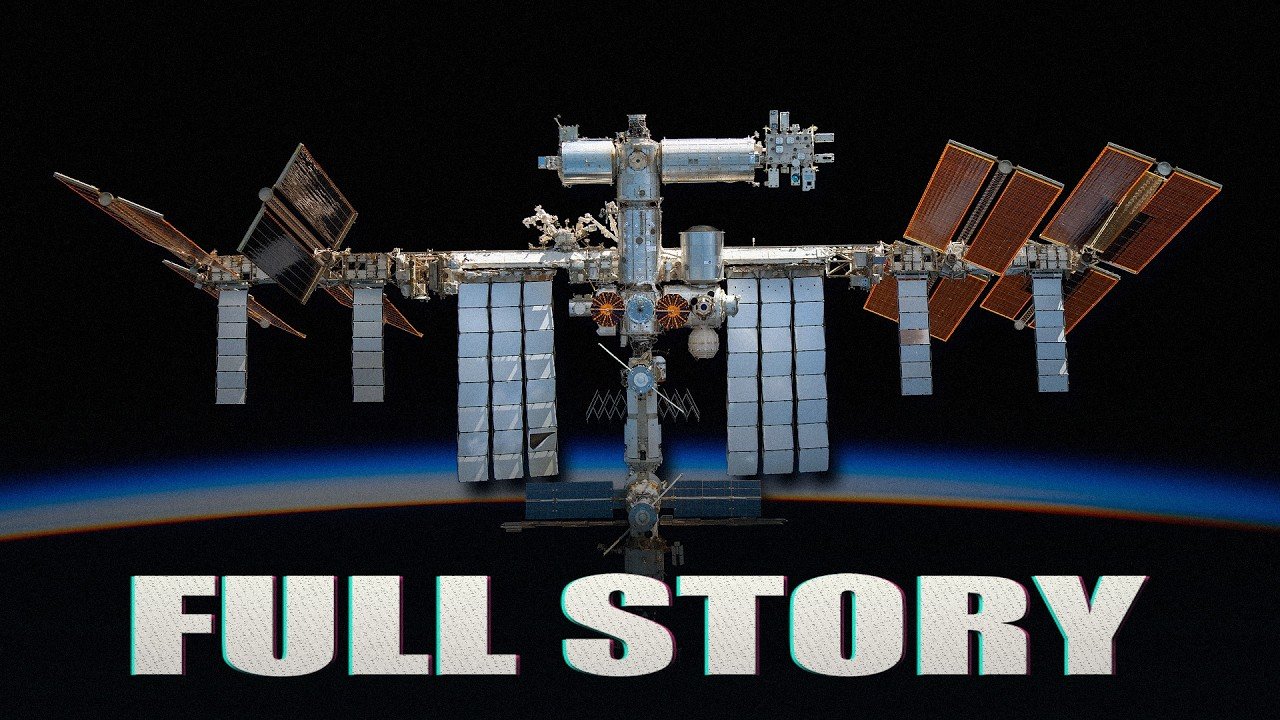
A documentary history of the International Space Station, from the first stations and Reagan's 1984 order to the 2026 crews. It covers the 216-215 House vote that saved the program, the Russian partnership, assembly in orbit, the grounding of the Shuttle after Columbia, and the station's later crises. The final chapters describe the leak in the PrK tunnel behind Zvezda, the planned retirement around 2030 and the de-orbit plan.
Full written account
The International Space Station survived its most dangerous vote by a single vote. On 23 June 1993 the House of Representatives rejected an amendment to end the program by 216 votes to 215, and a member changing his mind the other way would have ended it. Since 2 November 2000 people have lived aboard without a break. Over those years the station was ordered by a president to beat the Soviet Union, finished with the help of that same country, and kept alive through a lost shuttle, a war and a module that turned it upside down.
From Salyut 1 to a station Congress nearly killed
In June 1971 three Soviet cosmonauts became the first people to live aboard a space station, spending 23 days inside Salyut 1. Their Soyuz capsule lacked room for pressure suits. As it separated, a valve jolted open and the cabin air rushed out in less than a minute. All three men were dead when the hatch was opened, and every Soviet crew has worn pressure suits for launch and landing since.
America's Skylab was built from an unused third stage of a Saturn 5. A minute into launch its sun shield tore away, one solar wing was lost and the other jammed shut. Pete Conrad, Joe Kerwin and Paul Weitz arrived 11 days later and opened a parasol to shade the hull. Conrad and Kerwin cut a strap pinning the surviving wing, and when it snapped Conrad was flung away from the hull until his tether caught him. Skylab fell across Western Australia in July 1979, with no engine to climb back up.
In 1981 NASA administrator James Beggs and his deputy Hans Mark wanted a permanent station and avoided the word in their papers, asking for a permanent presence in space. Budget director David Stockman saw a bottomless expense. On 25 January 1984 Ronald Reagan told Congress he was directing NASA to develop a permanently manned station within a decade, and Reagan had asked whether it could be built with other countries. The decade deadline proved a hope, and the first crew moved in 16 years later.
Challenger broke apart 73 seconds after launch on 28 January 1986, killing all seven aboard, and grounded the shuttle for nearly three years. Europe committed to a laboratory called Columbus in 1988, with Japan and Canada also joining. In 1991 the House voted on killing the station outright and it survived. In 1993 Bill Clinton ordered a cheaper redesign before the 216-215 vote.
Building with Russia
On 2 September 1993 Al Gore and Russian Prime Minister Viktor Chernomyrdin signed a package tying the two countries together. Russia committed to limit missile technology exports and was invited to build the station. Norm Thagard became the first American to live aboard a Russian station in March 1995, and in June Atlantis closed on Mir at a few centimeters per second. Shannon Lucid spent 188 days on Mir in 1996.
The partnership then faced two crises within four months. On 23 February 1997 an oxygen canister flared into a jet of flame on Mir, and the flames partly cut off the way to one of the two lifeboats. In June, commander Vasily Tsibliyev was testing a cheaper docking method by remote control with the radar switched off. On 25 June the Progress freighter came in too fast, hit the Spektr module and punctured its hull. Cables run through the hatch were cut so it could be sealed. Half of Mir's power was gone and the station was tumbling, and Michael Foale estimated the spin rate by watching stars drift past his thumb at a window. Blame stayed disputed.
On 20 November 1998 a Proton lifted off from Kazakhstan with Zarya. Endeavour followed two weeks later with Unity. Robert Cabana and Sergey Krikalev opened the hatch together on 10 December. Zvezda, the module with crew quarters, life support and engines, was Russian and Russia could not pay to finish it, so the station circled empty for 18 months. It launched in July 2000.
On 31 October 2000 a Soyuz carried Bill Shepherd, Yuri Gidzenko and Sergey Krikalev from Baikonur. They docked at the back of Zvezda, and on 2 November Krikalev switched on the lights in a dark, cold station. The crew landed on 21 March 2001 on Discovery after 136 days on the station.
In June 2001 an overrun of about $4.8 billion led the Bush administration to cut the station back to what it called core complete. The American living quarters were cancelled, as was a vehicle that would have carried a larger crew home in an emergency. The only lifeboat was a three-seat Soyuz, so the crew stayed at three.
Columbia and the Soyuz bargain
On 1 February 2003 Columbia broke apart over Texas, killing all seven astronauts. Investigators found that foam broke from the external tank during launch and punched a hole in the leading edge of the wing. Ken Bowersox, Don Pettit and Nikolai Budarin, aboard the station, were due to come home on a shuttle. Crews shrank from three to two caretakers, and Soyuz capsules and Progress freighters carried everything. Their own Soyuz descent in May 2003 went into a steep ballistic fall, with about eight times their own weight, and they landed hundreds of kilometers short of target.
Discovery returned to flight in July 2005, but cameras caught foam breaking away again and the fleet was grounded for another year. In October 2007 a guide wire snagged during the unfolding of a solar wing and two tears opened in the blanket. Engineers and astronauts built five hinge straps nicknamed cufflinks. Scott Parazynski rode the end of a 50-foot inspection boom attached to the station's arm, cut the snagged wire and fastened the cuff links, and the wing unfolded to its full length.
Laboratories, water and new ways to catch cargo
Columbus arrived on Atlantis in February 2008, and Leopold Eyharts lifted it onto Harmony with the station's arm. Control of the lab passed to a room near Munich. Kibo reached the station in June 2008, with control passing to Tsukuba. Recycling made a crew of six possible. A still spins urine in a drum at low pressure and the vapor is cleaned again, with iodine keeping microbes from growing. The first drink was on 20 May 2009, and in June 2023 NASA reported it recovers 98% of the water aboard.
Japan's HTV has no docking system. On 17 September 2009 Nicole Stott caught it with Canadarm2 about 225 miles over western Romania, a method NASA wanted future American cargo ships to copy. SpaceX's Dragon, caught by Don Pettit on 25 May 2012, was the first privately built spacecraft to reach the station.
The Alpha Magnetic Spectrometer
Samuel Ting's 7-ton detector was built to count particles from deep space. When the station's life was extended from 2015 to 2020, he swapped its liquid-helium magnet for a permanent one from a prototype that flew in 1998. Endeavour carried it up on 16 May 2011 under Mark Kelly. On 3 April 2013 Ting presented the first result at CERN. From about 25 billion events, 400,000 positrons were recorded, and their share climbed instead of falling between 10 and 250 billion electron volts. Dark matter or pulsars could explain it. In 2019 the failing cooling pumps required a repair of a machine never meant to be touched. Luca Parmitano, Drew Morgan and others cut into the old cooling line and joined eight tubes to a new pump system, and on 25 January 2020 he tightened a leaking fitting a second time and it held.
Crises aboard
- On 16 July 2013 water filled Parmitano's helmet during a spacewalk, about 1.5 L in all. He found his way back to the airlock by memory. Investigators found a clogged part of the suit's cooling system pushed water into the air supply, and every helmet now carries an absorbent pad and a snorkel.
- In late August 2018 a hole about 2 mm across was found in a docked Soyuz. Roscosmos handed its findings to investigators and never published them.
- On 11 October 2018 a booster on a Soyuz carrying Nick Hague and Alexey Ovchinin struck the core stage. The escape system pulled the capsule away and both men walked away.
- On 29 July 2021 Nauka's thrusters fired on their own after docking, and the station turned about one and a half times before controllers flipped it another half turn.
- On 15 November 2021 Russia destroyed one of its own satellites, producing more than a thousand pieces, and the crew sheltered in their spacecraft.
- In January 2026 a crew member's medical concern led NASA to bring Crew 11 home about a month early. NASA never named the patient or the condition.
Crew Dragon, Starliner and the present
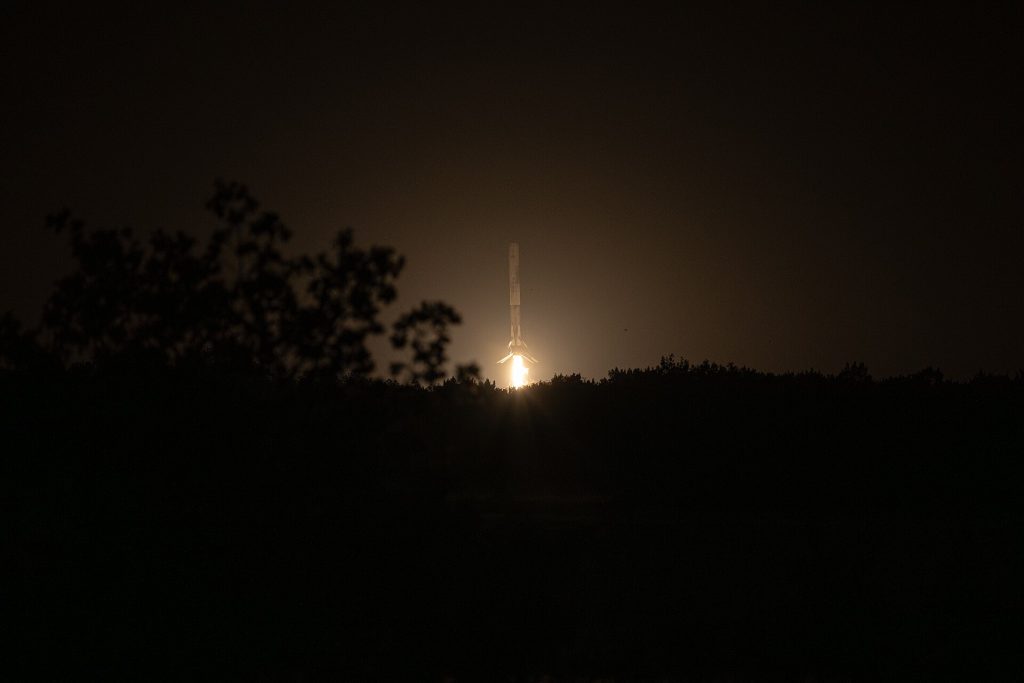
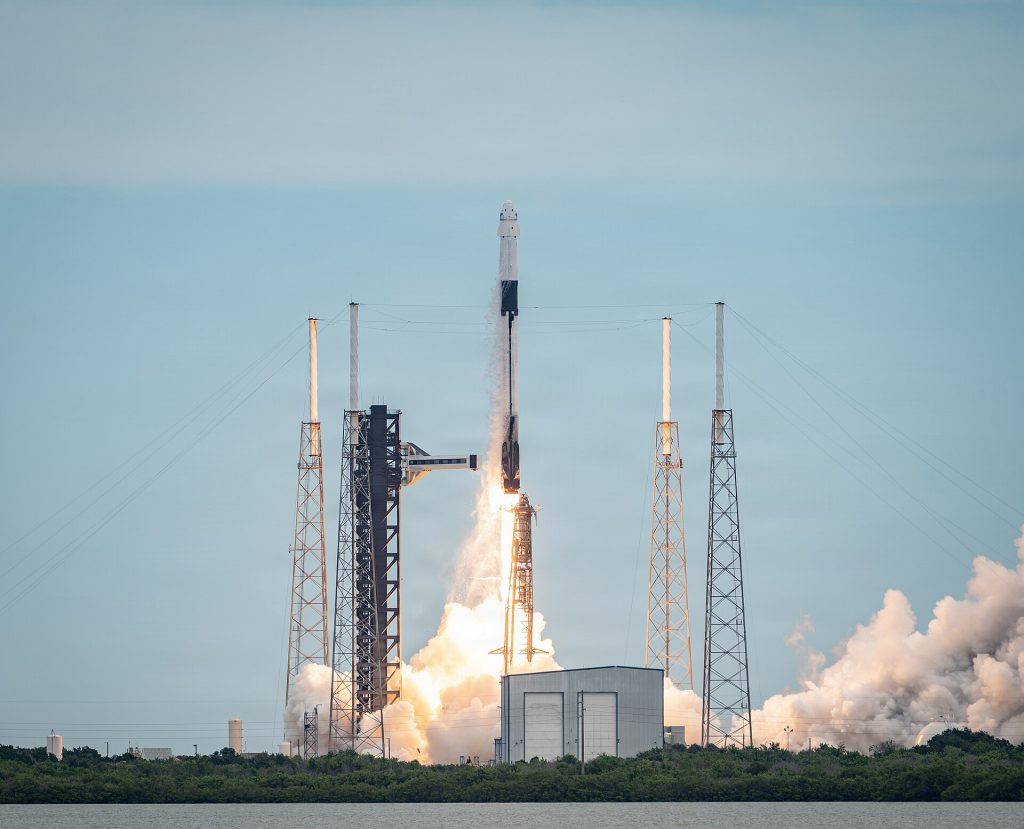
On 30 May 2020 Bob Behnken and Doug Hurley launched on a Falcon 9 and Crew Dragon from pad 39A, ending nearly 10 years without American launches of astronauts. Starliner launched on 5 June 2024 with Butch Wilmore and Sunni Williams. On approach several of its steering thrusters dropped out and helium was leaking. On 24 August NASA decided it would return empty. Wilmore and Williams came home on Dragon on 18 March 2025 after 286 days in space.
On 27 May 2026 Canadarm2 drew too much current and a wrist joint failed. Since 2019 cracks have leaked air from the PrK tunnel behind Zvezda, and in early June the leak rate climbed to about 2 lb of air a day. On 5 June NASA ordered Crew 12 and Chris Williams into their Dragon while Roscosmos prepared to cut away a bracket, and Roscosmos then paused the cut. On 30 June Jessica Meir and Williams replaced the wrist in 7 hours and 20 minutes.
NASA plans to retire the station around 2030 with a de-orbit vehicle, and a Senate bill would keep it flying until 2032. Crew 13 under Jessica Watkins docked 7 hours and 55 minutes after launch on 1 October.
Questions this video answers
When did people start living continuously aboard the ISS?
The first crew floated in on 2 November 2000, and people have lived aboard continuously since then.
How close was the vote that saved the station?
On 23 June 1993 the House defeated an amendment to end the program by 216 votes to 215.
What was the first piece of the station?
Zarya, launched on a Proton rocket from Kazakhstan on 20 November 1998. It was built in Moscow and paid for by the United States.
Why did a Starliner go home empty?
NASA was not convinced the capsule could bring its crew home, so on 24 August 2024 it decided Starliner would return without them. Wilmore and Williams came back on a SpaceX Dragon after 286 days in space.
What is the problem with the PrK tunnel?
Since 2019 cracks have leaked air from the PrK, a small tunnel at the back of Zvezda. Roscosmos blames metal fatigue from tiny vibrations, while NASA sees several causes and has warned the tunnel could fail catastrophically.
How is the station planned to end?
NASA plans to retire it around 2030 with a de-orbit vehicle that will dock, wait for the last crew to leave and fire its engines. The last burn would aim the station at the remote South Pacific.