A space telescope sees light that the air blocks, or sees it more sharply from above it. They are grouped here by the kind of light they were built to detect, from gamma rays to microwaves, with whether each is still working. Hubble and the James Webb Space Telescope each have a page with their videos.
- 24space telescopes in our list
- 10still working
- 14retired
- 6kinds of light covered
24 telescopes
| Notes | |||||
|---|---|---|---|---|---|
| Hubble Space Telescope | Visible, ultraviolet and near-infrared | NASA / ESA | 1990 | Active | Serviced five times by Space Shuttle crews, last in 2009 Source |
| James Webb Space Telescope | Infrared | NASA / ESA / CSA | 2021 | Active | Sits at the Sun-Earth L2 point, 1.5 million km from Earth Source |
| Chandra X-ray Observatory | X-ray | NASA | 1999 | Active | Launched on Space Shuttle Columbia Source |
| XMM-Newton | X-ray | ESA | 1999 | Active | Source |
| NuSTAR | X-ray | NASA | 2012 | Active | First focusing telescope for high-energy X-rays Source |
| IXPE | X-ray | NASA / ASI | 2021 | Active | Measures the polarisation of X-rays Source |
| XRISM | X-ray | JAXA / NASA | 2023 | Active | Source |
| Fermi Gamma-ray Space Telescope | Gamma ray | NASA | 2008 | Active | Source |
| Euclid | Visible and near-infrared | ESA | 2023 | Active | Maps dark matter and dark energy Source |
| CHEOPS | Visible | ESA | 2019 | Active | Measures the size of known exoplanets Source |
| Spitzer Space Telescope | Infrared | NASA | 2003 | Retired | Retired January 2020 Source |
| Kepler | Visible | NASA | 2009 | Retired | Retired October 2018 after finding thousands of exoplanets Source |
| Gaia | Visible | ESA | 2013 | Retired | Retired March 2025 after mapping about 2 billion stars Source |
| Herschel Space Observatory | Far-infrared and submillimetre | ESA | 2009 | Retired | Retired June 2013 when its coolant ran out Source |
| Planck | Microwave | ESA | 2009 | Retired | Mapped the leftover glow of the Big Bang; switched off October 2013 Source |
| INTEGRAL | Gamma ray | ESA | 2002 | Retired | Science operations ended February 2025 Source |
| WISE | Infrared | NASA | 2009 | Retired | Ran as NEOWISE until August 2024 Source |
| GALEX | Ultraviolet | NASA | 2003 | Retired | Retired 2013 Source |
| Compton Gamma Ray Observatory | Gamma ray | NASA | 1991 | Retired | Deorbited June 2000 Source |
| WMAP | Microwave | NASA | 2001 | Retired | Retired 2010 Source |
| ROSAT | X-ray | DLR / NASA / UK | 1990 | Retired | Ended 1999; re-entered 2011 Source |
| IRAS | Infrared | NASA / NL / UK | 1983 | Retired | First all-sky infrared survey; ran for ten months in 1983 Source |
| Einstein Observatory | X-ray | NASA | 1978 | Retired | First imaging X-ray telescope; 1978 to 1981 Source |
| Hipparcos | Visible | ESA | 1989 | Retired | Measured star positions; ended 1993 Source |
Nothing matches. Clear the search to see everything.
What they see, and which still work
- Active
- Retired
Source: Agency mission pages; launch dates from Wikidata (CC0) Download the data (CSV)
Show the data
| Light it sees | Active | Retired |
|---|---|---|
| Gamma ray | 1 | 2 |
| X-ray | 5 | 2 |
| Ultraviolet | 0 | 1 |
| Visible light | 3 | 3 |
| Infrared | 1 | 4 |
| Microwave | 0 | 2 |
Videos
Videos
Space telescopes in video
Hubble and Webb, in date order.
October – November 2026
-
Hera at Didymos: Plan for Two CubeSats and a Close Asteroid Look
European Space Agency, ESA -
Crew-12 Leaves the ISS: Dragon Freedom Undocking Step by Step
European Space Agency, ESA -
Crew-12 Hatch Closure: Dragon Freedom Readies to Leave the ISS
European Space Agency, ESA -
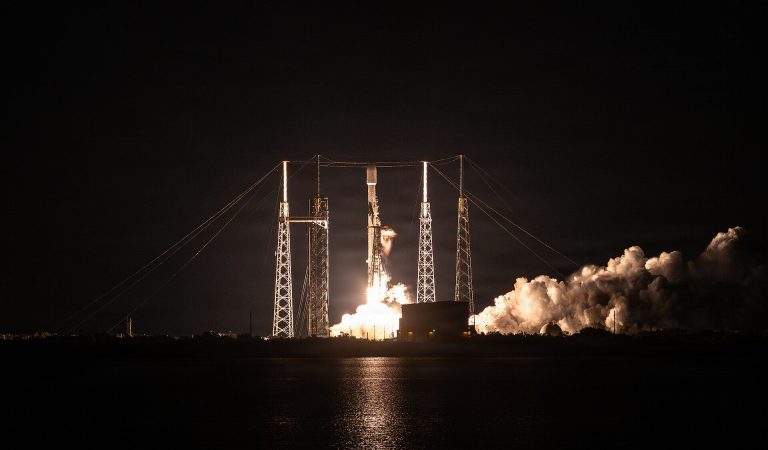
Starship Flight 14 Reaches Orbit and Three Falcons Fly in One Day
Scott Manley -
NASA’s SpaceX Crew-12 Re-Entry & Splashdown
NASA -
Crew-12 Return: Dragon Freedom Splashdown Off Los Angeles
European Space Agency, ESA -
Five Space Artifacts Adam Savage Identifies at the Air
Smithsonian National Air and Space Museum -
Cygnus XL Departs the ISS: Release, Burn and Re-entry Plan
NASA -
Sophie Adenot Back in Europe After 237 Days on the ISS
European Space Agency, ESA -
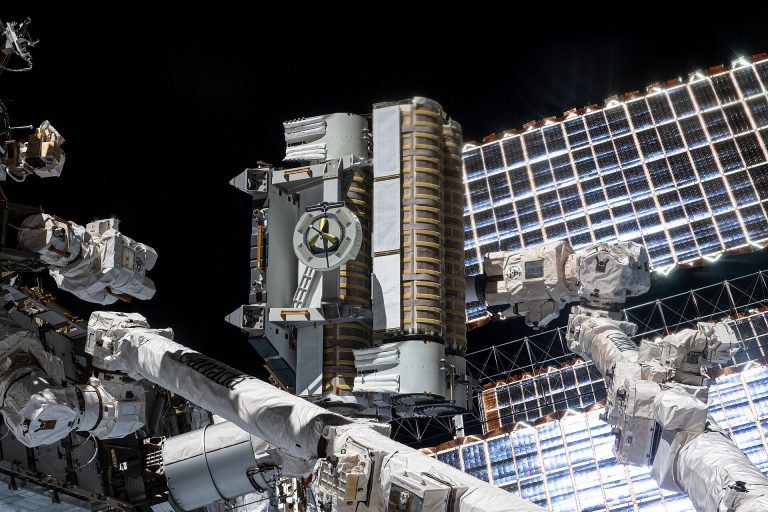
CRS-35: Falcon 9 Launches Dragon With Final Two ISS Solar Arrays
NASA -
CRS-35: Falcon 9 Launches Cargo Dragon With Final IROSA Arrays
NASASpaceflight -
Starlink 15-25: Falcon 9 B1088 Launch and Landing at Vandenberg
NASASpaceflight -
Crew-12 Crew Look Back on 237 Days Aboard the ISS
NASA -
SpaceX CRS-35 Dragon Docks at the ISS Harmony Zenith Port
NASA -
Galileo: How Europe Built Its Own Satellite Navigation System
European Space Agency, ESA -
New Glenn Recovery: Blue Origin’s Plan for Weekly Launches
Spaceflight Now -
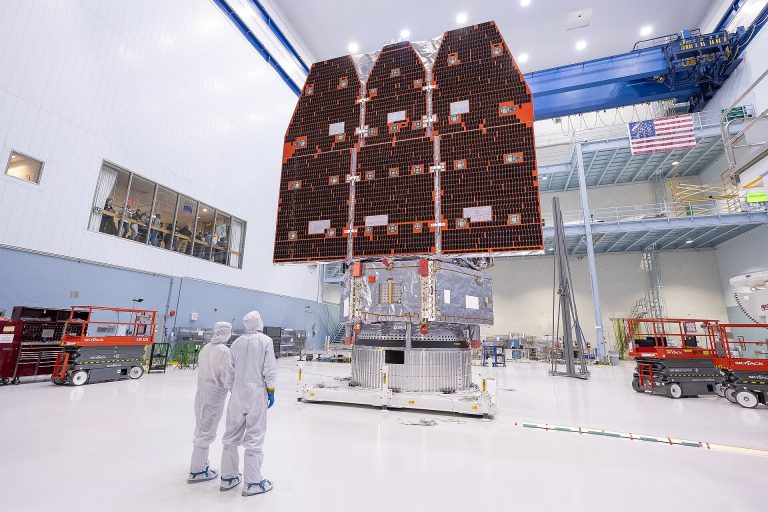
Roman Space Telescope: Falcon Heavy Launch and Path to L2
NASASpaceflight -
ISS iROSA Spacewalks 100 and 101: Final Solar Array Installs
NASA -
NASA Moon Base Rovers: VIPER, Pegasus and the Crewed Lunar Vehicle
NASA -
Bandwagon-5: Falcon 9 Rideshare Launch With Starfall Capsule
NASASpaceflight -
Neutron Delayed to 2027 After Voids Found in Carbon Dome
Rocket Lab -
Artemis 3 Update: Rocket Progress, Landers and the 2028 Plan
NASA -
Rocket Lab’s 98th Electron Launch Deploys Three HawkEye 360 Satellites
Rocket Lab -
Deep Space Updates: MMX to Phobos, Crew-12 Return, Neutron Delay
Scott Manley -
US Spacewalk 100: Installing the Seventh ISS Roll-Out Solar Array
NASA -
Artemis III: Orion Docks With Blue Moon and Starship in Orbit
The Space Race -
Four Satellites That Came Back: LES-1, AO-7, IMAGE and BeeSat 1
Scott Manley -
Starship Flight 14: First Orbit and 26 Starlink V3 Satellites
Beyond The Space -
Starship Flight 14: How V3 Reached Orbit and Deployed 26 Satellites
Curiously Brief -
Starship Flights 1 to 14: How Build-Fly-Fail-Fix Reached Orbit
Beyond Liftoff -
Starship’s 33 Raptor Engines: Four Reasons Behind Super Heavy
Celebrity Files -
Apollo 13: The Oxygen Tank Failure and the Lunar Module Lifeboat
Deep Orbit Stories -
Challenger STS-51-L: O-Ring Failure, Cold Launch and Return to Flight
FilmRise Television -
Challenger STS-51-L: The Night Engineers Said Don’t Launch
Margin of Loss -
Voyager 1 Nears One Light-Day: Thrusters, Power and the Big Bang
Googol Space -
How Starship’s Tower Catches Super Heavy: Flight 5 and After
look what's inside -
Artemis 3 Becomes an Earth-Orbit Rehearsal for Moon Landers
Cosmic Enigma -
Why Starship’s Heat Shield Uses Hexagonal Tiles and Full Reuse
Farzad -
Challenger: the O-Ring Chart and the Launch-Eve Teleconference
Failure Point for You -
Challenger STS-51-L: The Seals, the Cold and 73 Seconds
Horror Archive -
Apollo 13: The Dropped Tank and Switches Behind the Explosion
Truth and Proof -
Voyager 1 Pale Blue Dot: Why the Cameras Looked Back in 1990
Anaxa -
Challenger’s Wreckage: Why NASA Sealed It in Missile Silos
Rocketyard -
Challenger: How Thiokol’s Engineers Were Overruled the Night Before
Hubris Engine -
Curiosity at 14: Keeping a Mars Rover Running by Remote Control
Modern Mechanisms -
Challenger STS-51-L: O-Ring Warnings, Cabin Evidence, Rogers Findings
Hidden Timeline -
Columbia STS-107: Five Failures Behind the Foam Strike on the Wing
Holes Aligned -
Challenger STS-51-L: O-Rings, Cold and the Overruled Warning
Cindermap -
Voyager 1 Reaches One Light-Day: Power, Memory and the Golden Record
NumberShock -
How the Sky Crane Landed Curiosity on Mars in Seven Minutes
Future Systems Explained -
Apollo 13: How a Thermostat Error Led to the Oxygen Tank Blast
The Last Link -
Apollo 13: How an Oxygen Tank Failure Nearly Stranded Three Men
Gloamhall -
Apollo 13: How Aquarius and a Makeshift CO2 Adapter Saved the Crew
nelii -
Six Mars Rovers Compared: Landings, Discoveries and Distances
Cardsplained -
Voyager 1 and 2: Planetary Tour to One Light-Day From Earth
Deep Orbit Stories -
Challenger STS-51-L: The Cold O-Ring and the Launch Call
Matter & Empire -
Apollo 13: The Tank Flaw and Crew’s Lifeboat Return
The Third Eye English -
Challenger STS-51-L: The O-Ring Warning and the 73-Second Flight
CliphangerEntertainment -
Space Shuttle Story in a Card Box: Enterprise, Challenger, Columbia
The Record Institute -
Voyager 1: How It Proved It Had Reached Interstellar Space
Oruvi






Drag to explore dates · Select a video to preview.
Dates are when each video was first published on YouTube.
How these numbers are counted
This is a selection of the better-known space telescopes, not every one flown. The light each sees and its status are kept by hand from the operators’ mission pages (each row links its source); launch dates come from Wikidata. “Retired” means science operations have ended.
Data as of 2 November 2026. Source: Wikidata (CC0), with details from NASA, ESA and JAXA